View demoSign inGet a Free Website

Working Group

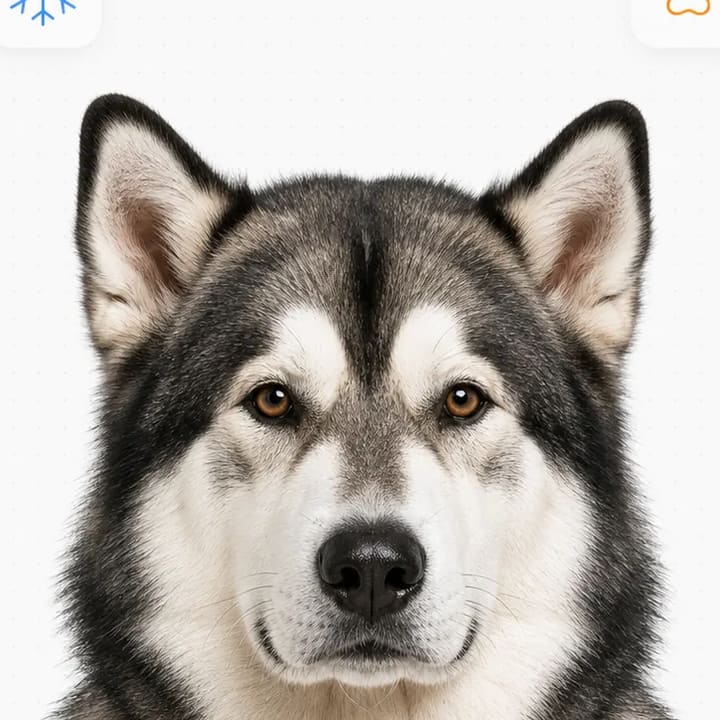
Alaskan Malamute

Freighting Dogs, Big Litters, One Waitlist for Every Puppy

Malamute litters can run large, and the breed has its own checklist: rear dewclaws off in the first days, a watch for day blindness at about seven weeks, and polyneuropathy DNA on both parents. Whelpify gives your program a real website, one numbered waitlist for every litter, and deposits through your own Stripe account, with no marketplace cut.

Alaskan Malamute portrait
AKC popularityNo. 81
Go-home8 weeks
Size
Large
Energy
High
Temperament
Affectionate, loyal, playful
Coat
Double
Colors
Gray & White, Black & White, Red & White, Sable & White, Seal & White, Silver & White, Blue & White, Agouti & White, White

General traits of the breed. Individual dogs vary. Coat follows the breed profile.

About the breed

About the Alaskan Malamute

The Malamute takes its name from the Mahlemiut, an Inuit people of Kotzebue Sound in northwestern Alaska, who bred it to haul heavy loads at low speed over long distances. The AKC sums up the difference from the Siberian Husky plainly: Huskies are racers, Malamutes are freighters. Malamutes went to Antarctica with Admiral Byrd, and the AKC recognized the breed in 1935, the same year the Alaskan Malamute Club of America was formed. It ranked No. 81 in the AKC's 2025 list.

Malamute buyers notice the face markings first, a cap with an all-white face or a bar or mask, and then the color, which runs from light gray through black, and sable through red, with all white the only solid. The standard describes a heavy-boned working dog and gives a desirable freighting size of 25 inches and 85 pounds for males, 23 inches and 75 pounds for females. Families also need to hear about the coat and the digging; the AKC says digging may be impossible to train out of a Mal.

The AKC gives a life expectancy of 10 to 14 years. The Alaskan Malamute Club of America requires hips, eyes, and the polyneuropathy DNA test of its members and breeders, and recommends screening for elbows, cardiac and thyroid disease, plus DNA tests for cone degeneration and primary ciliary dyskinesia. Chondrodysplasia, an inherited dwarfism seen mainly in Malamutes, is screened in puppies by X-ray.


Breeding today

Breeding Alaskan Malamutes Today

General figures for planning a litter, taken from the AKC and Malamute breed clubs. Your region and your lines move them, so treat them as a starting point.

Litter size
Can be largeThe Alaskan Malamute Club of Victoria notes litters as large as 12 pups, or sometimes larger, and calls leaving a bitch to whelp alone irresponsible. Plan help for whelping day.
Gestation
63 daysFrom ovulation, give or take a few days. Counting from the first breeding gives a much wider window, so progesterone timing pays off.
AKC popularity
No. 81In the 2025 rankings, after No. 79 in 2024 and No. 71 in 2023.
Carpus X-ray
6 to 12 weeksThe club recommends one view of one wrist in this window for litters at high risk of chondrodysplasia, such as those from known carriers.
Day blindness signs
7 weeksThe club says cone degeneration usually first shows at about 7 weeks, while the litter is still with you.
What buyers ask first
Color, then the yardGray, black, sable, red, or white, and then whether their fence goes far enough into the ground for a dog that digs.

Whelping and Raising Notes for Alaskan Malamutes

  1. The standard calls rear dewclaws undesirable and says they should be removed shortly after the puppies are whelped. Book that with your vet before the due date rather than after.
  2. Watch the litter in daylight around seven weeks. The club describes puppies with cone degeneration as nearly blind in bright light, shying from sunny areas and staying in shadows, with normal night vision. The DNA test sorts clear, carrier, and affected, and the club suggests a carrier can be bred to a confirmed clear dog with the puppies tested.
  3. Chondrodysplasia is recessive, so carriers look normal. The club's page says no DNA test was available when its research updates were written and recommends carpal X-rays for high-risk litters between 6 and 12 weeks. It keeps an open database of confirmed carriers and affected dogs.
  4. Placement is about the yard and the coat. The AKC says any fence must continue into the ground, and that the coat needs daily brushing with an undercoat rake added during the twice-yearly shed. Ask about the fence on the application and send a grooming plan home with each puppy.

Health testing

Health Testing for Alaskan Malamutes

The Alaskan Malamute Club of America's health statement, approved by its board in March 2022, splits testing into three required tests and five recommended ones. Its code of ethics adds that no member knowingly breeds two carriers of the same genetic disease.

The club requires hips, an eye screening, and the polyneuropathy DNA test of all members and breeders, and the AKC lists the same three as the club's recommended tests. OFA's CHIC (Canine Health Information Center) list for the breed requires the same three, with hips by an OFA or BVA evaluation and an ACVO or international eye exam, and lists thyroid and elbows as optional. A CHIC number on a parent's page is the shortest way to say "we did the work."

  • HipsRequired. The club's code of ethics says dogs used for breeding are cleared of hip dysplasia by OFA or PennHIP. OFA's CHIC list accepts an OFA or BVA evaluation, not PennHIP.
  • EyesRequired. An eye screening for inherited disease, which the code of ethics says is cleared through OFA's eye registry (CAER).
  • PolyneuropathyRequired. A DNA test for the recessive NDRG1 variant. The club says signs usually start between 7 and 18 months, with rear weakness and a bunny-hopping gait, and that carriers and affected dogs should not be mated to each other.
  • Cone DegenerationRecommended. A DNA test for the recessive CNGB3 mutation behind day blindness, which shows at about 7 weeks and does not worsen with age.
  • Elbows, Cardiac, and ThyroidRecommended. Screening for elbow dysplasia, congenital heart disease, and thyroid abnormalities.
  • Primary Ciliary DyskinesiaRecommended. A DNA test, listed on the club statement alongside cone degeneration.

Each dog record has a health section for results, registry numbers, and uploaded certificates. The public parent page shows what you choose to publish, and every puppy from that pairing links back to it. How dog records work

Your website

Your Alaskan Malamute Website, Built for You

Share your photos and a little about your dogs, and we design your website for you, free. You look it over before your plan starts.

  • Pages for your puppies, litters and parent dogs
  • Your application and waitlist built in
  • Yours to edit, any time
evergreengoldens.whelpify.com
The Evergreen Goldens demo website, with a family and their golden retrievers in the hero photo
The Evergreen Goldens demo website. Yours is designed around your own dogs.

Built for you, freeReview the design before your plan starts

How it fits

How Whelpify Fits an Alaskan Malamute Program

Three parts of a Malamute breeder's week that take the most back-and-forth, and what Whelpify does with each.

  • 1The LindgrensApplied Dec 2 · gray and white male#1 · Deposit paid
  • 2A. KowalczykApplied Jan 8 · red female#2 · Approved
  • 3Halvorsen familyApplied Jan 21 · any color, sledding home#3 · Approved
  • 4M. OyelaranApplied Feb 9 · black and white#4 · Follow up

Waitlist

One Numbered List for a Big Litter

Every inquiry and application lands in one list with a position, a status, and notes, including each family's color and sex preference and what they told you about their fence. Reorder it yourself, set a follow-up reminder for the family still burying wire along the fence line, and merge the person who emailed and then applied twice.

  1. Day 0Birth weights logged on each puppy
  2. First daysRear dewclaws removed, first photos posted
  3. Week 6 to 12Carpus X-ray for high-risk litters
  4. Week 7Daylight vision watched, offers sent
  5. Week 8Balances requested, go-home

Litter Updates

Weekly Photos From Whelping to Go-Home

Log weigh-ins and photos on each puppy record, and the litter page families follow updates with them. With a big litter on the ground, the waitlist sees each puppy grow without you answering the same question in a dozen text threads.

  • HipsGood
  • EyesNormal
  • PolyneuropathyClear
  • Cone degenerationCarrier
  • ElbowsNormal
  • ThyroidPending

Health

Hips, Eyes, and PN on Every Parent Page

Enter the hip and eye results and the polyneuropathy test once on each sire and dam, with registry numbers and the certificates themselves, and add the cone degeneration and PCD results if you test for them. The public parent page shows what you choose to publish, and every puppy from that pairing links back to it.

Ready for the breed

Set Up for the Alaskan Malamute From Day One

Choose Alaskan Malamute as your breed and its colors are already in your forms. This is the form a family fills in on your website, and what you see on your side.

your-kennel.com/waitlist

Join the Waitlist

Tell us what you are hoping for in your Alaskan Malamute puppy.

Preferred Gender
Preferred Colors
whelpify.com/dashboard/waitlist
#4TPThe ParkersLooking for: female · gray & whiteInquiry

Try it. Pick a color or two, the way a family would.

  1. The Breed’s Own ColorsYour waitlist form offers the 9 colors Whelpify keeps for the Alaskan Malamute. Change the list in Settings, or let families add their own.
  2. Saved With Their Place in LineWhat a family picks shows on their row, so when a litter arrives you can see who hoped for what.

The same colors are offered when you add a dog, a litter or a puppy.

Good to know

Questions Breeders Ask

Something we did not cover?Write to us. A person replies within one business day.

Contact Us

Yes. Your application captures color and sex preferences along with timing and notes, which is where a family tells you about their fence and whether the dog will pull. When a puppy that matches goes available, those families are notified first. Final matching is always your call.

Yes. Each dog record has a health section where you enter results and registry numbers and upload certificates. What you publish appears on that dog's public page, and every puppy from that pairing links back to it.

Yes. You offer a puppy to a family with a response window, and the deposit is collected when they accept. Anyone who passes stays on the list for the next puppy or the next litter.

Yes. Each female has a heat-cycle tab with her history, and you get a reminder before her next heat is due, so you can plan the breeding ahead of time.

No. Stripe is built in if you want card payments straight to your own account, and you can also mark a deposit received for Zelle, Venmo, PayPal, Cash App, or check. Whelpify takes no cut of your sales either way.

Yes. Your contract becomes a signable online form with your terms shown word for word, so the screening results and your health policy can sit right in it, as the club's code of ethics asks. Families sign with a typed legal name and date, and both of you keep a copy.

Planning a litter? Our heat cycle, whelping date, puppy weight and milestones calculators are free for anyone to use.Free Tools

Keep looking

More Working Breeds

All 203 Breeds
Time back

Less Paperwork,
More Time With Your Dogs

Bring your website, puppy listings, applications and payments together today. Go annual and claim your free custom domain after your first payment.