View demoSign inGet a Free Website

Herding Group

Australian Shepherd

Everyone Wants the Blue Merle, and Your Waitlist Should Know It

Aussie families arrive with a photo in their head: a blue merle with two blue eyes and copper trim. Your job is to match the right puppy to the right home, explain why merle to merle is off the table, and keep a list of active, opinionated families in the loop for months. Whelpify gives your program a real website, one organized waitlist, and deposits through your own Stripe account, with no marketplace cut.

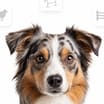
Australian Shepherd portrait
Typical litter6 to 8 pups
Life expectancy12 to 15 years
Size
Large
Energy
Very high
Temperament
Smart, work-oriented, exuberant
Coat
Double
Colors
Black Tri, Red Tri, Blue Merle, Red Merle, Black, Red, Blue Merle Tri, Red Merle Tri, Black Bi, Red Bi, Blue Merle Bi, Red Merle Bi, and 6 more

General traits of the breed. Individual dogs vary. Coat follows the breed profile.

About the breed

A Ranch Dog With a Fan Club, and a Color Chart Buyers Memorize

Despite the name, the Australian Shepherd was developed in the American West, working stock on ranches and rodeo circuits through the 1900s. The breed was recognized by the AKC in 1991, and today it sits comfortably among the most popular breeds in the country, equal parts family companion, agility competitor, and working dog.

Aussies come in four base colors, blue merle, red merle, black, and red, each with or without white markings and copper points. Add eye color, which can be blue, amber, brown, or a mix, and families show up wanting a very specific dog. Most breeders spend real time explaining that a black tri with the same temperament is every bit the same Aussie, and that the merle pattern is a single gene that should never be doubled up.

Well-bred Aussies are sound and long-lived, but the breed has known concerns: hip and elbow dysplasia, inherited eye disease including cataracts and Collie eye anomaly, the MDR1 drug-sensitivity mutation, and epilepsy that runs in some lines. Responsible programs screen every generation, publish the results, and say plainly that this is a high-drive dog that needs a job.


Breeding today

What the Market Looks Like Right Now

Honest context for planning a litter. These are the ranges we see on public listings and in parent club guidance; your region, your lines, and your reputation move them.

Typical pet price
$1,000 to $3,000Cleared parents, titled lines, and blue merles with blue eyes sit toward the top. Limited registration is the norm for pet homes.
Litter size
6 to 8Commonly around seven, with anything from four to nine on the table. Colors and markings vary widely within one litter.
Gestation
63 daysFrom ovulation. Progesterone timing is common, especially for breeders using shipped or frozen semen.
Deposit norms
$300 to $500Usually non-refundable, applied to the balance, and often taken after the litter is born and colors are known.
Waitlist length
3 to 9 monthsEstablished programs often carry a list across litters, and families waiting for a specific color wait longer.
What buyers ask first
Color and eyesBlue merle with blue eyes is the picture most families arrive with. The better question is whether they can handle the drive, and your application should ask it.

Whelping and Raising Notes for Aussies

  1. Never breed merle to merle. A double merle puppy has a high risk of being deaf, blind, or both, and every breed club code of ethics says so. Know the genotype of both parents, including cryptic or minimal merles that can pass as solids.
  2. Decide on tails early. Most US Aussies are docked in the first few days, and some are born with natural bobtails. The natural bobtail gene is lethal when doubled, so two bobtail parents should not be paired. Put your tail policy on the site so families are not surprised.
  3. MDR1 matters for the whole life of the dog. Tell every family the puppy's status (clear, carrier, or affected) in writing, because ivermectin and several common drugs are dangerous for affected dogs. A line in the contract and the go-home folder saves a vet emergency later.
  4. Aussie puppies are busy from the moment their eyes open. Families expect early neurological stimulation, a socialization program, and a breeder who can talk frankly about exercise, herding instinct, and nipping. If you do that work, say so on your site.

Health testing

The Clearances Aussie Buyers Ask About, and the One They Should

The United States Australian Shepherd Association recommends hip and elbow evaluations, an annual eye exam, and DNA testing for the hereditary conditions the breed is known to carry. Most serious buyers have at least read the MDR1 page.

CHIC (Canine Health Information Center) issues a number when an Aussie has the breed's required results on file with OFA: an OFA hip evaluation, elbows, and an eye exam. Thyroid and the CEA and MDR1 DNA tests are optional. A CHIC number on a parent's page is the shortest way to say "we did the work."

  • HipsOFA evaluation at 24 months or older. Fair, Good, or Excellent are passing grades. PennHIP is also used, but OFA's CHIC list accepts only the OFA evaluation.
  • ElbowsOFA elbow radiographs at 24 months or older, graded Normal or by dysplasia grade.
  • EyesAnnual exam by a board-certified veterinary ophthalmologist, recorded through the OFA eye registry, watching for cataracts, Collie eye anomaly, PRA, and iris coloboma, which is more common in merles.
  • MDR1DNA test for the multidrug resistance mutation. Carriers and affected dogs react badly to ivermectin and several common drugs. Results should go home with every puppy in writing.
  • DNA PanelCommonly HSF4 hereditary cataract, Collie eye anomaly (CEA), PRA-prcd, and degenerative myelopathy. Carriers can be bred responsibly to clear partners.
  • Merle and Bobtail GenotypeNot a disease test but a breeding rule. Merle to merle produces double merle puppies with a high risk of deafness and blindness, and two natural bobtails should not be paired. Knowing the genotype of both parents protects the litter.

Each dog record has a health section for results, registry numbers, and uploaded certificates. The public parent page shows what you choose to publish, and every puppy from that pairing links back to it. How dog records work

Your website

Your Australian Shepherd Website, Built for You

Share your photos and a little about your dogs, and we design your website for you, free. You look it over before your plan starts.

  • Pages for your puppies, litters and parent dogs
  • Your application and waitlist built in
  • Yours to edit, any time
evergreengoldens.whelpify.com
The Evergreen Goldens demo website, with a family and their golden retrievers in the hero photo
The Evergreen Goldens demo website. Yours is designed around your own dogs.

Built for you, freeReview the design before your plan starts

How it fits

Run an Aussie Program Like the Matching Business It Is

Three things Australian Shepherd breeders spend the most time on, and how Whelpify handles each one out of the box.

ColorBlue merle · Red merle · Black · Red
MarkingsTri (copper + white) · Bi (white only) · Self (solid)
EyesBlue · Amber · Brown · Split or marbled

Matching

Color, Markings, Eyes, Captured on the Application

Aussie families are specific. Your application asks about color, sex, eye color, and whether they want a working prospect or a couch companion, and those answers sit on every waitlist card. When a puppy goes available, families whose color and sex preferences match get notified, and the rest of the list stays calm.

  • OFA hipsGood
  • OFA elbowsNormal
  • Eyes (annual)Normal
  • MDR1Carrier
  • HSF4 cataractClear
  • CEA / PRA-prcdClear

Clearances

Hips, Elbows, Eyes, MDR1, on Every Parent Page

Attach OFA numbers, the latest eye exam, and the DNA panel to the sire and dam once. Every litter and puppy page shows the parents' screening beside their photos and pedigree, so the family researching merle genetics at midnight finds the answer on your site instead of in your inbox.

  • 1Ramos familyBlue merle · F · agility homeApproved
  • 2J. WhitakerAny color · M · has fenced acreageApproved
  • 3The OkonkwosRed tri · either · first AussieApplied
  • 4S. LindgrenRed merle · F · spring 2027Waiting

Waitlist

One List, in Order, With Notes

Every inquiry and application lands in one numbered queue with a status, the family's preferences, and your notes. Reorder it yourself, set a follow-up reminder on a family you want to call, and merge the duplicate who emailed and then applied. When the litter is born, the people who said "any color, must be a male" are right there.

Ready for the breed

Set Up for the Australian Shepherd From Day One

Choose Australian Shepherd as your breed and its colors are already in your forms. This is the form a family fills in on your website, and what you see on your side.

your-kennel.com/waitlist

Join the Waitlist

Tell us what you are hoping for in your Australian Shepherd puppy.

Preferred Gender
Preferred Colors
whelpify.com/dashboard/waitlist
#4TPThe ParkersLooking for: female · black triInquiry

Try it. Pick a color or two, the way a family would.

  1. The Breed’s Own ColorsYour waitlist form offers the 18 colors Whelpify keeps for the Australian Shepherd. Change the list in Settings, or let families add their own.
  2. Saved With Their Place in LineWhat a family picks shows on their row, so when a litter arrives you can see who hoped for what.

The same colors are offered when you add a dog, a litter or a puppy.

Good to know

Questions Breeders Ask

Something we did not cover?Write to us. A person replies within one business day.

Contact Us

Yes. Your application can ask for color and sex preferences (and anything else, like eye color or working versus pet home). Color and sex preferences are used to notify matching families when a puppy becomes available. Final matching is always your call.

Each dog record has a health section where you enter results and registry numbers and upload certificates. What you publish appears on that dog's public page and on every litter and puppy page that descends from it, so buyers see the clearances before they email you.

Yes. Create the litter from the sire and dam pairing and publish it as upcoming. Interested families can apply and join the waitlist, and when the litter is born you can notify them and start posting puppies with photos and current weights.

Yes. Each female has a cycle tab with a visual timeline, an estimated fertile window for planning, and an email and dashboard alert before her next heat is expected. Predictions learn each dog's own cycle length over time.

No. Stripe is built in if you want card payments straight to your own account, and you can also send invoices for Zelle, Venmo, PayPal, Cash App, or check and mark them paid yourself. Whelpify takes no cut of your sales either way; Stripe charges its standard processing fee.

Yes. Every dog, litter, puppy, and waitlist entry is tagged by breed, and your website presents each breed cleanly. Multi-breed programs are supported on every plan.

Planning a litter? Our heat cycle, whelping date, puppy weight and milestones calculators are free for anyone to use.Free Tools

Keep looking

More Herding Breeds

All 203 Breeds
Time back

Less Paperwork,
More Time With Your Dogs

Bring your website, puppy listings, applications and payments together today. Go annual and claim your free custom domain after your first payment.