View demoSign inGet a Free Website

Non-Sporting Group

Poodle (Standard)

A Standard Poodle Program, Organized Down to the Coat Color

Standard Poodle families come for the coat and stay for the dog: a big, athletic, clever companion that lives well into its teens. Your buyers have read about sebaceous adenitis, Addison's, and bloat, and they expect a breeder who tests, discloses, and stays in touch. Whelpify gives your program a real website, one organized waitlist, and deposits through your own Stripe account, with no marketplace cut.

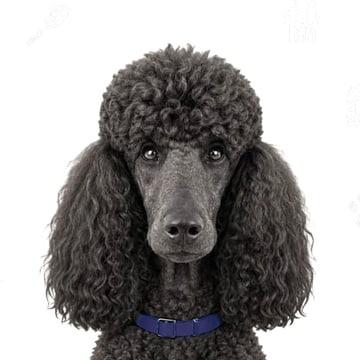
Poodle (Standard) portrait
Typical litter5 to 8 pups
Life expectancy10 to 18 years
Size
Large
Energy
High
Temperament
Intelligent, proud, active
Coat
Curly
Colors
Apricot, Black, Blue, Brown, Cafe Au Lait, Cream, Gray, Red, Silver, Silver Beige, White, Parti, and 6 more

General traits of the breed. Individual dogs vary. Coat follows the breed profile.

About the breed

A Retriever in a Show Coat, and the Smartest Dog Most Families Will Ever Own

The Standard Poodle is the original Poodle: a water retriever developed in Germany and refined in France, where it became the national dog. The famous clips started as practical trims for swimming in cold water. The Miniature and Toy were bred down from it later, which is why the Standard is the only variety with the build and drive of a real working retriever.

Poodles are among the most popular breeds in the United States, and the Standard draws a particular family: one that wants a large, low-shedding, trainable dog and has usually done its homework. They arrive asking about allergies and coat care, and they leave asking about sebaceous adenitis, Addison's disease, and bloat, because the breed forums taught them to.

Standards are generally healthy and often live into their mid-teens, but the breed carries a well-documented list: hip dysplasia, inherited eye disease, sebaceous adenitis, autoimmune thyroiditis, Addison's disease, and gastric dilatation-volvulus in a deep-chested dog. Responsible programs test every generation, talk openly about what runs in their lines, and publish the results.

Breeding today

What the Market Looks Like Right Now

Honest context for planning a litter. These are the ranges we see on public listings and in parent club guidance; your region, your lines, and your reputation move them.

Typical pet price
$1,500 to $3,500Fully tested parents, titled lines, and in-demand colors such as red sit toward the top. Limited registration is the norm for pet homes.
Litter size
5 to 8Commonly around seven. Standards can throw ten or more, so plan supplemental feeding and weigh-ins before you need them.
Gestation
63 daysFrom ovulation. Progesterone timing is common in Poodle programs, especially with shipped or frozen semen.
Deposit norms
$300 to $500Sometimes higher. Usually non-refundable, applied to the balance, with the balance due before or at go-home.
Waitlist length
6 to 12 monthsEstablished programs commonly carry a list across litters, and families waiting for a specific color wait longer.
What buyers ask first
Coat and allergiesLow-shedding is the reason many families arrive. Health testing and what runs in your lines is the conversation that decides whether they stay.

Whelping and Raising Notes for Standards

  1. Color changes. Blacks can silver out, apricots and reds can fade toward cream, and browns can turn cafe au lait by two years. Say so on the puppy page, because the family who paid for "red" should know what red often looks like at three.
  2. Decide on tails and dewclaws in the first few days and put the policy on your site. Docking is traditional in the US and optional; some buyers want a natural tail, and some show homes do not.
  3. Introduce grooming early. Dryer noise, table time, and a first face, feet, and tail clip before go-home make the next fifteen years of grooming easier, and buyers notice. Families also need to hear about the coat change around 9 to 16 months, when matting can get away from them fast.
  4. Talk about bloat before go-home, not after. Standards are deep-chested, and many breeders discuss a prophylactic gastropexy at spay or neuter. Addison's has no DNA test, so honest disclosure of what is known in the pedigree is the only screening there is.

Health testing

The Panel Poodle Buyers Have Already Read About

The Poodle Club of America asks breeders to screen Standards for hips and eyes and to test for the autoimmune and inherited conditions the variety is known for. Because some of the most serious concerns have no DNA test, honest disclosure of the pedigree is part of the standard of care.

CHIC (Canine Health Information Center) issues a number when a Poodle has four results on file with OFA: hips, an eye exam, a patellar evaluation at one year or older, and the prcd-PRA DNA test. OFA uses one list for all three varieties. The club's own health page still lists a Standard's CHIC requirements as hips and an eye exam plus at least one of sebaceous adenitis, thyroid, or cardiac, so many programs do all of them. A CHIC number on a parent's page is the shortest way to say "we did the work."

  • HipsOFA evaluation at 24 months or older (or PennHIP). Fair, Good, or Excellent are passing grades.
  • EyesAnnual exam by a board-certified veterinary ophthalmologist, recorded through the OFA eye registry, watching for cataracts, PRA, and other inherited eye disease.
  • PatellasRequired for CHIC. A veterinary evaluation for patellar luxation at one year or older, registered with OFA.
  • Sebaceous AdenitisSkin punch biopsy read by a dermatopathologist and registered with OFA. SA is an inflammatory skin disease the breed is known for; since it can appear later in life, many breeders repeat the biopsy periodically on breeding dogs.
  • ThyroidOFA thyroid panel for autoimmune thyroiditis, typically repeated as the dog ages.
  • CardiacExamination by a veterinary cardiologist, registered with OFA, screening for congenital and adult-onset heart disease.
  • DNA Panel and DisclosureThe prcd-PRA test is required for CHIC. Commonly added: neonatal encephalopathy with seizures (NEwS), von Willebrand disease type 1, and degenerative myelopathy. Addison's disease and bloat have no DNA test, so serious breeders disclose what is known in the line and talk through gastropexy with every family.

Each dog record has a health section for results, registry numbers, and uploaded certificates. The public parent page shows what you choose to publish, and every puppy from that pairing links back to it. How dog records work

Your website

Your Poodle (Standard) Website, Built for You

Share your photos and a little about your dogs, and we design your website for you, free. You look it over before your plan starts.

  • Pages for your puppies, litters and parent dogs
  • Your application and waitlist built in
  • Yours to edit, any time
evergreengoldens.whelpify.com
The Evergreen Goldens demo website, with a family and their golden retrievers in the hero photo
The Evergreen Goldens demo website. Yours is designed around your own dogs.

Built for you, freeReview the design before your plan starts

How it fits

Run a Standard Poodle Program Like the Trust Business It Is

Three things Standard Poodle breeders spend the most time on, and how Whelpify handles each one out of the box.

ColorBlack · White · Apricot · Red · Cream · Brown · Silver · Blue
PatternSolid (AKC show) · Parti · Phantom · Abstract
HomeCompanion · Show prospect · Service or therapy · Sport

Preferences

Color, Sex, and Size, Captured on the Application

Poodle families want a specific dog: a red female, a black male with a show coat, something that will finish under 45 pounds. Your application asks, the answers sit on every waitlist card, and families whose color and sex preferences match get notified the moment a puppy goes available.


  • OFA hipsExcellent
  • Eyes (annual)Normal
  • SA biopsyNormal
  • ThyroidNormal
  • CardiacNormal
  • vWD / NEwS / PRAClear

Testing

Hips, Eyes, SA, Thyroid, on Every Parent Page

Attach OFA numbers, the current eye exam, the sebaceous adenitis biopsy, thyroid and cardiac results, and the DNA panel to the sire and dam once. Every litter and puppy page shows the parents' screening beside their photos and pedigree, so the family who has read every forum thread finds the answer on your site.

  1. Day 0Litter born, weights logged, families notified
  2. Day 3Tails and dewclaws, policy stated on the litter page
  3. Week 3Eyes and ears open, first photos to the waitlist
  4. Week 6First face, feet, and tail clip, offers go out
  5. Week 7Vet check, first vaccine, balance requests sent
  6. Week 8Contracts signed, go-home day

Timeline

Eight Weeks of Updates, on a Schedule

A Standard Poodle litter has a rhythm, from tails and dewclaws in the first days through the first clip and the go-home vet visit. Log weights and weekly photos on each puppy record and the litter page updates for the families on your list. Balance requests go out on the date you choose, and contracts are signed before pickup day.

Ready for the breed

Set Up for the Poodle (Standard) From Day One

Choose Poodle (Standard) as your breed and its colors are already in your forms. This is the form a family fills in on your website, and what you see on your side.

your-kennel.com/waitlist

Join the Waitlist

Tell us what you are hoping for in your Poodle (Standard) puppy.

Preferred Gender
Preferred Colors
whelpify.com/dashboard/waitlist
#4TPThe ParkersLooking for: female · apricotInquiry

Try it. Pick a color or two, the way a family would.

  1. The Breed’s Own ColorsYour waitlist form offers the 18 colors Whelpify keeps for the Poodle (Standard). Change the list in Settings, or let families add their own.
  2. Saved With Their Place in LineWhat a family picks shows on their row, so when a litter arrives you can see who hoped for what.

The same colors are offered when you add a dog, a litter or a puppy.

Good to know

Questions Breeders Ask

Something we did not cover?Write to us. A person replies within one business day.

Contact Us

Yes. Each dog record has a health section where you enter results and registry numbers and upload certificates. What you publish appears on that dog's public page and on every litter and puppy page that descends from it, so the family who has read the forums finds the answer on your site.

Your application can capture color and sex preferences, and those preferences are used to notify matching families when a puppy becomes available. Families who miss out hear about similar puppies in the next litter without re-applying. Final matching is always your call.

Yes. Puppy and litter pages are yours to write, and your contract can say it in a statement block the family reads and signs. Many breeders also add a line on the application so the expectation is set before the deposit.

Turn your documents into a signable form once, with your terms shown word for word, and assign it to each family. They sign with a typed legal name and date from their portal, and both sides keep the signed copy. You can start from a ready-made purchase contract template and edit it.

No. Stripe is built in if you want card payments straight to your own account, and you can also send invoices for Zelle, Venmo, PayPal, Cash App, or check and mark them paid yourself. Whelpify takes no cut of your sales either way; Stripe charges its standard processing fee.

Yes. Every dog, litter, puppy, and waitlist entry is tagged by breed, and your website presents each one cleanly. Multi-breed programs are supported on every plan.

Planning a litter? Our heat cycle, whelping date, puppy weight and milestones calculators are free for anyone to use.Free Tools

Keep looking

More Non-Sporting Breeds

All 203 Breeds
Time back

Less Paperwork,
More Time With Your Dogs

Bring your website, puppy listings, applications and payments together today. Go annual and claim your free custom domain after your first payment.