View demoSign inGet a Free Website

Hound Group

Basenji

One Season a Year, a Waitlist That Waits With You

Most Basenji bitches come into season once a year, in the fall, so families apply in spring and wait for puppies in early winter. Informed buyers ask for the Fanconi and PRA DNA results on both parents before anything else. Whelpify gives your program a real website, one waitlist that holds a year of interest, and deposits through your own Stripe account, with no marketplace cut.

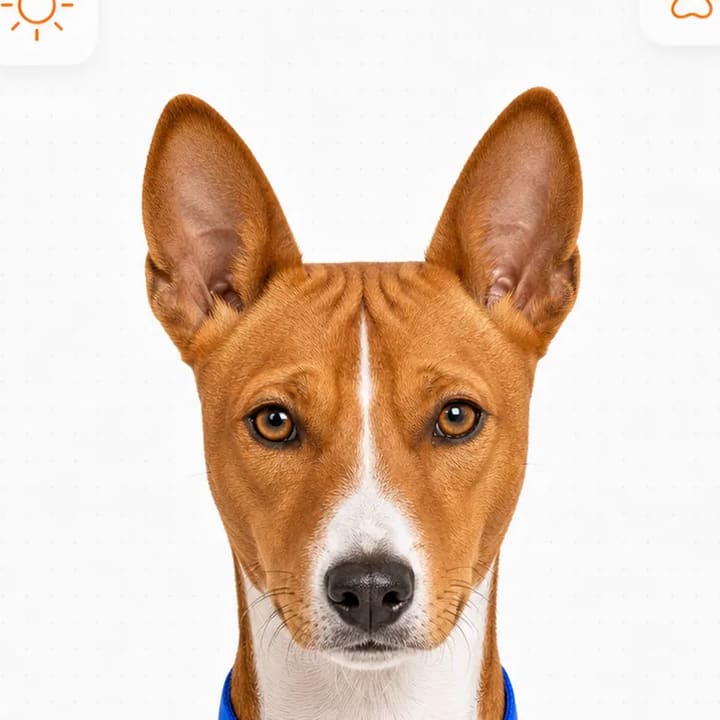
Basenji portrait
Typical litter1 a year
Go-home8 weeks
Size
Small
Energy
High
Temperament
Independent, smart, poised
Coat
Smooth
Colors
Red & White, Black & White, Black Tan & White, Tricolor, Brindle & White, Black Brindle & White, Cream & White, Sable & White

General traits of the breed. Individual dogs vary. Coat follows the breed profile.

About the breed

About the Basenji

Basenjis were brought up the Nile from central Africa as gifts to the pharaohs, and the AKC calls them contenders for the title of oldest AKC breed. A pair reached England in 1895 and died soon after. A second pair arrived in 1937, and the surviving male, Bois, went to a Boston breeder with a female named Congo, which produced the first Basenjis bred in America. The AKC recognized the breed in 1944, and it ranked No. 92 in the AKC's 2025 list.

Basenji buyers know they want a Basenji, and they know to wait. The standard allows chestnut red, pure black, tricolor, or brindle, all with white feet, chest, and tail tip, so color is a real preference. The club tells buyers to interview breeders for next year's litter, and many breeders start their waiting list in spring for a fall breeding. Families also ask about the famous barklessness: the standard says a Basenji should not bark but is not mute.

The AKC gives a life expectancy of 13 to 14 years, and the Basenji Club of America calls the breed very healthy as a whole. Its health statement names two diseases that have troubled the breed, Fanconi syndrome and progressive retinal atrophy, both now much reduced by DNA testing. Hip dysplasia is uncommon, with 3.34 percent of Basenjis tested found abnormal as of 2016, and about 5 percent of those tested were hypothyroid. The AKC also names IPSID, an inflammatory bowel disease, as something breeders screen for.


Breeding today

Breeding Basenjis Today

General figures for planning a litter, from the AKC, OFA, and the Basenji Club of America. Your lines, your region, and how many breeders near you have a fall litter move them.

Breeding season
Once a yearThe club says bitches usually come into season once a year, in the fall, with puppies arriving in late fall or early winter. Not every bitch keeps to it, but plan the year around one litter.
Gestation
63 daysFrom ovulation, give or take a few days. With one season a year, progesterone timing is worth the vet visits.
AKC popularity
No. 92In the 2025 rankings, out of 202 breeds. The AKC calls the Basenji a cult breed, small in numbers.
Clearance ages
12 to 24 monthsOFA thyroid results can be registered from 12 months, and OFA hips at a minimum of 24 months. PennHIP can be done from 4 months.
When families apply
SpringThe club says many breeders add to their waiting list in spring for a fall breeding, and it tells buyers to expect to wait.
What buyers ask first
DNA results, then colorThe Fanconi and PRA results on the sire and dam, which the club tells buyers to ask for, then red, black, tricolor, or brindle.

Whelping and Raising Notes for Basenjis

  1. Plan the year backward from a fall season. Families who apply in spring are waiting through the summer, the breeding, and the whelping, so tell them when you expect the season and post the litter as soon as it arrives.
  2. Eye exams can start early. The club recommends examination by an ACVO ophthalmologist beginning at 7 weeks, so a litter exam can be done before the puppies go home at 8 weeks or later.
  3. Puppies from two DNA-clear parents may be declared genetically free of Fanconi and PRA-BJ1, though the club suggests considering further testing for first-generation breeding stock. Carriers live normal lives and should be bred only to clears.
  4. The standard notes that dewclaws are usually removed, and that forehead wrinkles show most in puppies. Send companion puppies home on spay or neuter contracts with a health guarantee and lifetime take-back, as the club expects.

Health testing

Health Testing for Basenjis

The Basenji Club of America's health statement, approved in 2017, asks for regular eye exams and the Fanconi and PRA-BJ1 DNA tests before breeding, and covers hip and thyroid evaluations too. All five are on the breed's CHIC list.

CHIC (Canine Health Information Center) issues a number when a Basenji has all five results on file with OFA: hips, an ACVO eye exam, an autoimmune thyroiditis evaluation, and the Fanconi and PRA DNA tests. The dog needs a microchip or tattoo, and results need not be normal, but they must be public. A CHIC number on a parent's page is the shortest way to say "we did the work."

  • HipsRequired. An OFA evaluation at a minimum of 24 months or PennHIP from 4 months. The club says 3.34 percent of Basenjis tested were abnormal as of December 2016.
  • EyesRequired. An ACVO eye exam each year until age 6, then every 2 years. The club recommends regular exams beginning at 7 weeks.
  • Autoimmune ThyroiditisRequired. An evaluation from an approved laboratory, registered with OFA from 12 months. The club says Basenjis with autoimmune thyroiditis should not be bred.
  • Fanconi SyndromeRequired. A DNA test from an approved laboratory, registered with OFA. Fanconi is a kidney tubule disorder, and dogs caught early and treated with the Gonto Protocol have, on average, a normal life span.
  • PRA-BJ1Required. A DNA test for Basenji progressive retinal atrophy, registered with OFA. The club says PRA-BJ1 accounts for about half of the PRA in the breed and, because it starts late, should be tested before breeding.

Each dog record has a health section for results, registry numbers, and uploaded certificates. The public parent page shows what you choose to publish, and every puppy from that pairing links back to it. How dog records work

Your website

Your Basenji Website, Built for You

Share your photos and a little about your dogs, and we design your website for you, free. You look it over before your plan starts.

  • Pages for your puppies, litters and parent dogs
  • Your application and waitlist built in
  • Yours to edit, any time
evergreengoldens.whelpify.com
The Evergreen Goldens demo website, with a family and their golden retrievers in the hero photo
The Evergreen Goldens demo website. Yours is designed around your own dogs.

Built for you, freeReview the design before your plan starts

How it fits

How Whelpify Fits a Basenji Program

Three parts of a Basenji breeder's year that take the most patience, and what Whelpify does with each.

  • 1The Varga familyApplied Mar 4 · red female#1 · Approved
  • 2T. MensahApplied Mar 19 · tricolor, any sex#2 · Approved
  • 3R. HalloranApplied Apr 8 · brindle male#3 · Approved
  • 4Sato familyApplied May 2 · any color#4 · Follow up

Waitlist

Spring Applications for a Fall Litter

Every inquiry and application lands in one numbered list with a position, a status, and notes, months before there is a puppy to offer. Reorder it yourself, set a follow-up reminder for the family you want to meet in summer, and merge the person who emailed and then applied twice.

  • FanconiClear
  • PRA-BJ1Clear
  • HipsGood
  • ThyroidNormal
  • EyesAnnual exam due

Health

Fanconi and PRA Results Where Buyers Look

Enter hips, the eye exam, thyroid, and the Fanconi and PRA-BJ1 DNA results once on each sire and dam, with registry numbers and the certificates themselves. The public parent page shows what you choose to publish, and every puppy from that pairing links back to it.

  1. SpringWaiting list opens for the fall litter
  2. FallHeat reminder, breeding, due date set
  3. Day 0Litter born, families notified
  4. Week 7Litter eye exam, offers sent
  5. Week 8Balances requested, go-home

Timeline

One Season, Planned From the Start

Each female has a heat-cycle tab with her history and a reminder before her next season is due. Once the litter is on the ground, log weights and photos on each puppy, offer each one with a response window, and send balance requests on the date you choose.

Ready for the breed

Set Up for the Basenji From Day One

Choose Basenji as your breed and its colors are already in your forms. This is the form a family fills in on your website, and what you see on your side.

your-kennel.com/waitlist

Join the Waitlist

Tell us what you are hoping for in your Basenji puppy.

Preferred Gender
Preferred Colors
whelpify.com/dashboard/waitlist
#4TPThe ParkersLooking for: female · red & whiteInquiry

Try it. Pick a color or two, the way a family would.

  1. The Breed’s Own ColorsYour waitlist form offers the 8 colors Whelpify keeps for the Basenji. Change the list in Settings, or let families add their own.
  2. Saved With Their Place in LineWhat a family picks shows on their row, so when a litter arrives you can see who hoped for what.

The same colors are offered when you add a dog, a litter or a puppy.

Good to know

Questions Breeders Ask

Something we did not cover?Write to us. A person replies within one business day.

Contact Us

Yes. The waitlist is one numbered list with statuses and notes, and it stays put between litters. You reorder it, set follow-up reminders for the families you still want to meet, and anyone who passes on this litter stays on the list for next year.

Yes. Each dog record has a health section where you enter results and registry numbers and upload certificates. What you publish appears on that dog's public page, and every puppy from that pairing links back to it.

Yes. Your application captures color and sex preferences along with timing and notes. When a puppy that matches goes available, those families are notified first. Final matching is always your call.

Yes. Each female has a heat-cycle tab with her history, and you get a reminder before her next heat is due, whether that is once a year or more often.

No. Stripe is built in if you want card payments straight to your own account, and you can also mark a deposit received for Zelle, Venmo, PayPal, Cash App, or check. Whelpify takes no cut of your sales either way.

Yes. Your contract becomes a signable online form with your terms shown word for word. Families sign with a typed legal name and date, and both of you keep a copy.

Planning a litter? Our heat cycle, whelping date, puppy weight and milestones calculators are free for anyone to use.Free Tools

Keep looking

More Hound Breeds

All 203 Breeds
Time back

Less Paperwork,
More Time With Your Dogs

Bring your website, puppy listings, applications and payments together today. Go annual and claim your free custom domain after your first payment.