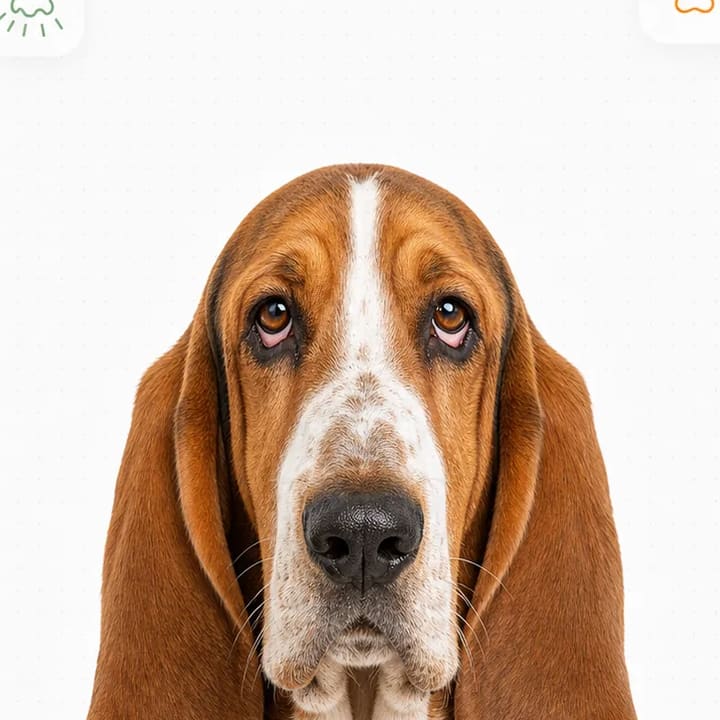
The Basset was developed in France and Belgium, and the name comes from the French "bas," meaning low. The friars of the Abbey of St. Hubert are thought to have crossed older French hounds to get a low scenting hound a hunter could follow on foot after rabbit and deer. The AKC recognized the breed in 1885, the Basset Hound Club of America was organized in 1935, and the breed ranked No. 34 in the AKC's 2025 list.
Basset buyers usually come for the look and the temperament: the domed head, the extremely long, velvety ears, the loose skin, and a hound the standard calls mild, never sharp or timid. The standard accepts any recognized hound color and says the distribution of color and markings is of no importance, so families ask for tricolor, lemon and white, red and white, or mahogany and white by preference rather than by rule. The better-informed ones also know a Basset has more bone for its size than any other breed and a loud, ringing voice on a scent.
The AKC gives a life expectancy of 12 to 13 years. The club's 2022 health policy draws on its 2016 survey of more than 7,500 Basset Hounds and names four recessive conditions with proven DNA tests: thrombopathia, primary open angle glaucoma, MPS I, and Lafora disease. It also lists problems with no test yet, including bloat, intervertebral disc disease, lymphoma, and hemangiosarcoma, and asks breeders to discuss them openly with buyers.