View demoSign inGet a Free Website

Sporting Group

Chesapeake Bay Retriever

Brown, Sedge, and Deadgrass, One Waitlist for Every Litter

Chessie buyers want to know the color, the coat, and whether the parents work water, and the careful ones ask for hips, elbows, eyes, and the PRA, EIC, and DM results by name. The club's code lets puppies go home at seven weeks, so the offers and paperwork come early. Whelpify gives your program a real website, one waitlist that remembers who asked for what, and deposits through your own Stripe account, with no marketplace cut.

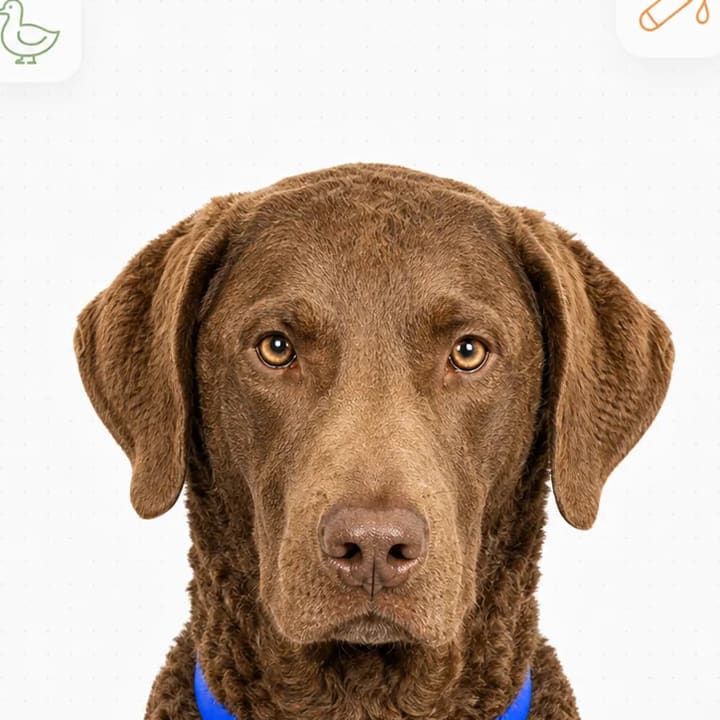
Chesapeake Bay Retriever portrait
Large-breed litter6 to 8 pups
Go-home7 weeks
Size
Large
Energy
High
Temperament
Loyal, hard-working, protective
Coat
Wavy Wiry
Colors
Brown, Dark Brown, Light Brown, Sedge, Deadgrass, Tan, Ash

General traits of the breed. Individual dogs vary. Coat follows the breed profile.

About the breed

About the Chesapeake Bay Retriever

Owners of the duck clubs along the Chesapeake Bay set the Chessie's type in the 1800s, from a mix thought to include Newfoundlands, Irish Water Spaniels, and hounds of unknown origin, to retrieve in water that sits near freezing from early winter to spring. A definite type was fixed by the time the AKC was founded in 1884, and the AKC gives 1878 as the breed's year of recognition. It ranked No. 56 in the AKC's 2025 list.

Chessie buyers ask about color and coat first. The standard accepts any color of brown, sedge, or deadgrass with no color preferred over another, allows a small white spot on the breast, belly, toes, or back of the feet, and disqualifies black. The oily double coat is short and wavy over the shoulders, neck, back, and loins, and a curly coat disqualifies. The other question is temperament: the AKC describes a protective dog with a mind of its own, polite but not overtly friendly with strangers, so many families want to hear how you raise and socialize your litters.

The AKC gives a life expectancy of 10 to 13 years and names hip dysplasia as the main concern, as in most large breeds, with PRA-prcd the most common form of progressive retinal atrophy in the breed. The American Chesapeake Club strongly recommends that breeding stock be tested for hips, elbows, eyes, PRA, EIC, and DM.


Breeding today

Breeding Chesapeakes Today

General figures for planning a litter, taken from the AKC, the American Chesapeake Club, and a published survey. Your region, your lines, and whether you breed for the marsh, the ring, or both all move them.

Gestation
63 daysFrom ovulation, give or take a few days. Counting from the first breeding is much less exact, so progesterone timing is worth the vet visits.
AKC popularity
No. 56In the 2025 rankings, after No. 52 in 2024 and No. 54 in 2023.
Dam's first breeding
Second heatThe ACC code of ethics says never to breed a bitch before her second heat, and only when she is mature and in good health.
Go-home
7 weeksThe club sets seven weeks as the earliest age a puppy may go to its new home. Say on your site when yours go home.
Caesarean rate
About 7%In a 2004 survey of UK breed club members, 7 of 103 Chesapeake litters (6.8 percent) were born by caesarean.
What buyers ask first
Color and driveBrown, sedge, or deadgrass, whether the parents hunt or run tests, and how a protective, independent dog will fit their household.

Whelping and Raising Notes for Chesapeakes

  1. Rear dewclaws have to come off. The standard makes dewclaws on the hind legs a disqualification and says front dewclaws may be removed, so plan the timing with your vet before the litter is due.
  2. The standard accepts any shade of brown, sedge, or deadgrass and prefers none over another. White is allowed only as a spot on the breast, belly, toes, or back of the feet, and the smaller the better, so note any white when you evaluate show prospects.
  3. EIC is recessive, so both parents must carry it for a puppy to be affected, and the club advises testing dogs and bitches before every breeding. DM is also recessive, with incomplete penetrance: an at-risk dog may never show signs, and the disease starts at 7 years or older.
  4. The AKC calls a well-socialized Chessie a confident companion and notes the breed is protective and reserved with strangers. Plenty of new people, sounds, and surfaces before go-home are worth the time, and so is telling families what you did.

Health testing

Health Testing for Chesapeakes

The American Chesapeake Club's health statement, approved by its board in 2016, strongly recommends six screenings for all breeding stock. The AKC lists the same six for the breed.

The club asks that breeding stock be tested for hip and elbow dysplasia, PRA and all other hereditary eye diseases, exercise-induced collapse, and degenerative myelopathy, with the results normal or otherwise. Its code of ethics also asks breeders to know the genetic defects that can harm the breed and to put sales and guarantees in writing. Showing every result on the parent page lets a buyer read them for themselves.

  • HipsAn OFA or PennHIP evaluation. The AKC calls hip dysplasia a concern in the Chesapeake, as in most large breeds.
  • ElbowsAn OFA elbow evaluation, part of the club health statement.
  • EyesAn exam by a certified veterinary ophthalmologist, to screen for PRA and the other hereditary eye diseases the club names.
  • PRA-PrcdA DNA test for progressive rod-cone degeneration, which the AKC calls the most common form of progressive retinal atrophy in the breed.
  • Exercise-Induced Collapse (EIC)A DNA test. Affected dogs can collapse under strenuous exercise. It is recessive, so both parents must carry it for a puppy to be affected.
  • Degenerative Myelopathy (DM)A DNA test reported as clear, carrier, or at risk. DM begins at 7 years or older with loss of function in the hind legs, and not every at-risk dog develops it.

Each dog record has a health section for results, registry numbers, and uploaded certificates. The public parent page shows what you choose to publish, and every puppy from that pairing links back to it. How dog records work

Your website

Your Chesapeake Bay Retriever Website, Built for You

Share your photos and a little about your dogs, and we design your website for you, free. You look it over before your plan starts.

  • Pages for your puppies, litters and parent dogs
  • Your application and waitlist built in
  • Yours to edit, any time
evergreengoldens.whelpify.com
The Evergreen Goldens demo website, with a family and their golden retrievers in the hero photo
The Evergreen Goldens demo website. Yours is designed around your own dogs.

Built for you, freeReview the design before your plan starts

How it fits

How Whelpify Fits a Chesapeake Program

Three parts of a Chesapeake breeder's week that take the most back-and-forth, and what Whelpify does with each.

Deadgrass · FDark brown · MSedge · anyFall 2027Note: waterfowl hunting homeNote: hunt test plans

Preferences captured on the application, used to notify matching families

Preferences

Who Asked for the Deadgrass Female

Your application captures each family's color and sex preference, their timing, and notes, which is where they tell you about the duck blind, the hunt tests, or the kids at home. When a puppy becomes available, the families whose preferences match are told first, and the final match is yours to make.

  • The Albrechts$500 paid · Sep 2
  • D. Mensah$500 paid · Sep 3
  • Pruitt family$500 paid · Sep 5
  • L. Sorensenbalance $1,500 · Oct 10

Payments

Deposits to Your Stripe, Balances on a Date

Offer a puppy to a family with a response window and collect the deposit when they accept, through your own Stripe account or by marking a Zelle or Venmo payment received. With puppies leaving as early as seven weeks, the balance request goes out on the date you choose, and every payment stays tied to its puppy and its family.

  • HipsGood
  • ElbowsNormal
  • EyesNormal
  • PRA-prcdClear
  • EICClear
  • DMCarrier

Health

Six Screenings on Every Parent Page

Enter the hip, elbow, and eye results and the PRA, EIC, and DM tests once on each sire and dam, with registry numbers and the certificates themselves. The public parent page shows what you choose to publish, and every puppy from that pairing links back to it, so the buyer who asks about DM finds the answer before emailing.

Ready for the breed

Set Up for the Chesapeake Bay Retriever From Day One

Choose Chesapeake Bay Retriever as your breed and its colors are already in your forms. This is the form a family fills in on your website, and what you see on your side.

your-kennel.com/waitlist

Join the Waitlist

Tell us what you are hoping for in your Chesapeake Bay Retriever puppy.

Preferred Gender
Preferred Colors
whelpify.com/dashboard/waitlist
#4TPThe ParkersLooking for: female · brownInquiry

Try it. Pick a color or two, the way a family would.

  1. The Breed’s Own ColorsYour waitlist form offers the 7 colors Whelpify keeps for the Chesapeake Bay Retriever. Change the list in Settings, or let families add their own.
  2. Saved With Their Place in LineWhat a family picks shows on their row, so when a litter arrives you can see who hoped for what.

The same colors are offered when you add a dog, a litter or a puppy.

Good to know

Questions Breeders Ask

Something we did not cover?Write to us. A person replies within one business day.

Contact Us

Yes. Your application captures color and sex preferences along with timing and notes. When a puppy that matches goes available, those families are notified first. Final matching is always your call.

Yes. Each dog record has a health section where you enter results and registry numbers and upload certificates. What you publish appears on that dog's public page, and every puppy from that pairing links back to it.

Yes. The waitlist is one numbered list with statuses and notes, so a hunting home and a family home sit in the same list with what each one asked for. You reorder it, set follow-up reminders, and decide which family is offered which puppy.

Yes. Each female has a heat-cycle tab with her history, and you get a reminder before her next heat is due. That makes it easy to check against the club's rule about not breeding before the second heat.

No. Stripe is built in if you want card payments straight to your own account, and you can also mark a deposit received for Zelle, Venmo, PayPal, Cash App, or check. Whelpify takes no cut of your sales either way.

Yes. Your contract becomes a signable online form with your terms shown word for word. Families sign with a typed legal name and date, and both of you keep a copy.

Planning a litter? Our heat cycle, whelping date, puppy weight and milestones calculators are free for anyone to use.Free Tools

Keep looking

More Sporting Breeds

All 203 Breeds
Time back

Less Paperwork,
More Time With Your Dogs

Bring your website, puppy listings, applications and payments together today. Go annual and claim your free custom domain after your first payment.