View demoSign inGet a Free Website

Working Group

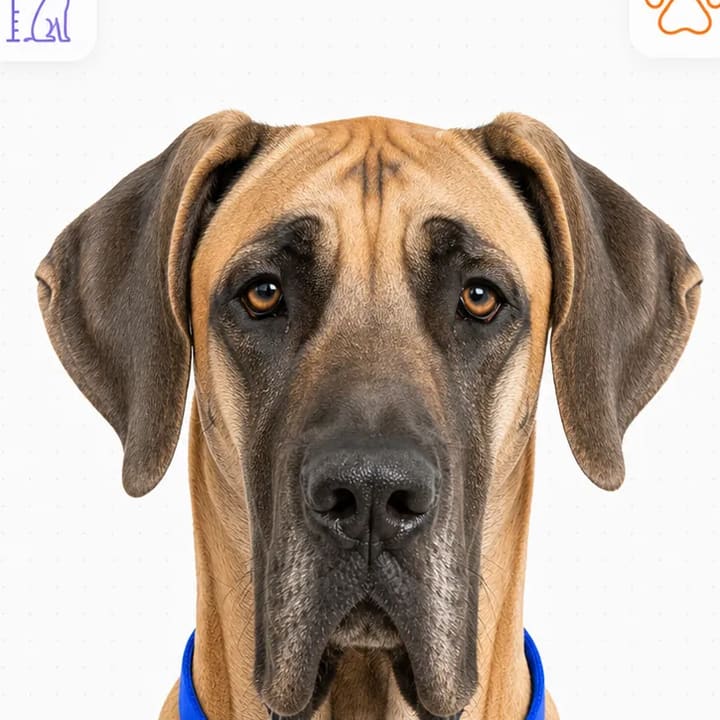
Great Dane

Color Families, Big Litters, and One Waitlist

Great Dane families ask for a color, and the honest answer depends on the color family behind your pairing: fawn and brindle, harlequin and mantle with merle, or blue. Litters are large, puppies grow faster than buyers expect, and the informed ones ask about hearts, hips, and bloat. Whelpify gives your program a real website, one waitlist that remembers who asked for what, and deposits through your own Stripe account, with no marketplace cut.

Great Dane portrait
Typical litter7 pups
Go-home7 to 8 weeks
Size
Giant
Energy
Moderate
Temperament
Friendly, patient, dependable
Coat
Smooth
Colors
Fawn, Brindle, Blue, Black, Harlequin, Mantle, Merle, Fawnequin, Merlequin, Blue Merle, Chocolate, Silver, and 8 more

General traits of the breed. Individual dogs vary. Coat follows the breed profile.

About the breed

About the Great Dane

German nobles used the Great Dane to hunt wild boar, and the breed as we know it was developed in Europe in the 1800s and declared the national breed of Germany in 1876. Nobody is sure how a German dog came to be tied to Denmark; the English name translates the French grand Danois. The AKC recognized the breed in 1887, and it ranked No. 22 in the AKC's 2025 list.

Color is the first thing most Dane families ask about. The standard describes seven colors: brindle, fawn, blue, black, harlequin, mantle, and merle, and any other color is a disqualification, as is a merlequin, a white dog with only merle patches. Merle has shown in the AKC ring since January 1, 2019, and the club's judging guide says merle has always been part of the mantle and harlequin family and is needed to produce harlequins. Buyers also ask about size: the standard sets a minimum of 30 inches for males and 28 for females.

The AKC gives a life expectancy of 7 to 10 years. The Great Dane Club of America calls bloat (GDV) the number one killer of Danes, and its health pages add dilated cardiomyopathy, hip dysplasia, hypothyroidism, Wobblers syndrome, and bone cancer. Many breeders and owners consider a prophylactic gastropexy, and the club asks for hip, heart, thyroid, and eye results on every dog used for breeding.


Breeding today

Breeding Great Danes Today

General figures for planning a litter, taken from the AKC, the Great Dane Club of America, and published registry data. Your region, your lines, and your color family all move them.

Litter size
7.1 averageThe mean at birth for Great Danes in a study of Norwegian Kennel Club litters. Plan whelping space, help, and the waitlist for a big litter.
Gestation
63 daysFrom ovulation. Counted from the first breeding the AKC gives a range of 58 to 72 days, so progesterone timing is worth the vet visits.
AKC popularity
No. 22In the 2025 rankings, after No. 21 in 2024 and No. 19 in 2023.
Health baseline
About 2 yearsThe GDCA asks for normal hip, heart, thyroid, and eye results at about two years, with heart and thyroid repeated at least every 2 to 3 years.
Breeding age
18 monthsThe club's code recommends a bitch be at least 18 months old and bred no more than once a year, and a stud dog a year or more.
What buyers ask first
Color, then healthWhich colors the pairing can produce, then hearts, bloat, and how long the parents and their relatives lived.

Whelping and Raising Notes for Great Danes

  1. Line up a giant breed vet before the due date. The GDCA's surgical guidelines, written for spays and C-sections alike, ask for a vet with giant breed experience, pre-surgical blood work with a clotting profile, IV fluids, and active warming afterward, because a clotting complication called DIC appears to occur more often in giant dogs undergoing surgery.
  2. Know your color family before you promise colors. The GDCA is preparing an updated color code that accounts for merle; its earlier code kept fawn and brindle, harlequin and mantle, and blue lines apart. Merle to merle breeding is strongly discouraged in the research the club publishes, because double merles are mostly white and prone to hearing and eye problems.
  3. Send the feeding plan home in writing. The club tells owners a Dane puppy grows as much in its first year as a child does in fourteen, that three or four meals a day drop to two by 6 to 9 months, and that a Dane should eat twice a day for life, which also matters for bloat.
  4. Build the club's sale terms into your paperwork. The GDCA code asks for a color-marked pedigree of four or more generations, copies of both parents' screenings, a vet exam within 72 hours of purchase, and a right of first refusal if the dog is ever rehomed.

Health testing

Health Testing for Great Danes

The Great Dane Club of America board approved its health testing recommendations in 2003 and strongly recommends that every Dane bred have a CHIC number. Four tests make up CHIC, and the club asks for more than the minimum on heart and thyroid.

CHIC (Canine Health Information Center) issues a number when a Great Dane has results on file with OFA for hips (OFA or PennHIP), eyes, an advanced cardiac exam by a board-certified cardiologist that includes an echocardiogram, and autoimmune thyroid disease. The GDCA adds that heart and thyroid tests should be repeated at least every 2 to 3 years, and that these four tests are not enough on their own. A CHIC number on a parent's page is the shortest way to say "we did the work."

  • HipsRequired. An OFA or PennHIP evaluation. The club recommends that breeding stock be x-rayed as normal, with a baseline at about two years.
  • CardiacRequired. An advanced cardiac exam by a board-certified veterinary cardiologist, including an echocardiogram, recorded with OFA. The club recommends echocardiograms for all adult Danes used for breeding, particularly stud dogs, because dilated cardiomyopathy is suspected to be inherited in the breed.
  • Autoimmune ThyroidRequired. An OFA thyroid evaluation. The club suggests routine T4, TSH, and autoantibody testing on breeding stock, and says dogs with confirmed thyroid abnormalities should not be bred.
  • EyesRequired. An eye exam with results recorded by OFA. The club notes cataracts and eyelid problems such as entropion are seen in the breed.
  • Bloat and GastropexyNo screening test. The club calls bloat the number one killer of Danes, and many breeders and owners consider a preventive gastropexy. Talk about it with every family.
  • Wobblers and Growth DisordersNo screening test. The club says Wobblers syndrome is thought to involve both nutrition and inheritance, and that HOD and panosteitis strike during the rapid growth of puppyhood. Keep records of any cases in your lines and share them honestly.

Each dog record has a health section for results, registry numbers, and uploaded certificates. The public parent page shows what you choose to publish, and every puppy from that pairing links back to it. How dog records work

Your website

Your Great Dane Website, Built for You

Share your photos and a little about your dogs, and we design your website for you, free. You look it over before your plan starts.

  • Pages for your puppies, litters and parent dogs
  • Your application and waitlist built in
  • Yours to edit, any time
evergreengoldens.whelpify.com
The Evergreen Goldens demo website, with a family and their golden retrievers in the hero photo
The Evergreen Goldens demo website. Yours is designed around your own dogs.

Built for you, freeReview the design before your plan starts

How it fits

How Whelpify Fits a Great Dane Program

Three parts of a Dane breeder's week that take the most back-and-forth, and what Whelpify does with each.

Fawn and brindleFawn · Brindle
Harlequin and mantleHarlequin · Mantle · Merle · Black
BlueBlue · Black

Colors

Every Standard Color on the Record

Breed colors are choices on every dog and puppy record, so a mantle, a merle, and a harlequin are recorded as what they are. Your application captures each family's color and sex preference, their timing, and notes. When a puppy becomes available, the families whose preferences match are told first, and the final match is yours to make.

  • Rinaldi family$500 paid · Apr 2
  • D. Osei$500 paid · Apr 4
  • The Lunds$500 paid · Apr 9
  • M. Carverbalance $2,000 · May 20

Deposits

Seven Puppies, Seven Reservations

Offer a puppy to a family with a response window, take the deposit through your own Stripe account or mark it received for Zelle, Venmo, PayPal, Cash App, or check, and let the balance request go out on the date you choose. If a family passes, the next match on the list hears about the puppy. Whelpify takes no cut.

  • HipsGood
  • Cardiac (echo)Normal
  • ThyroidNormal
  • EyesNormal
  • Cardiac recheckDue next year
  • BloatGastropexy advice sent

Health

Hearts, Hips, and Thyroid on Every Parent Page

Enter hip, cardiac, thyroid, and eye results once on each sire and dam, with registry numbers and the certificates themselves, and add the repeat echo and thyroid panel when they come in. The public parent page shows what you choose to publish, and every puppy from that pairing links back to it.

Ready for the breed

Set Up for the Great Dane From Day One

Choose Great Dane as your breed and its colors are already in your forms. This is the form a family fills in on your website, and what you see on your side.

your-kennel.com/waitlist

Join the Waitlist

Tell us what you are hoping for in your Great Dane puppy.

Preferred Gender
Preferred Colors
whelpify.com/dashboard/waitlist
#4TPThe ParkersLooking for: female · fawnInquiry

Try it. Pick a color or two, the way a family would.

  1. The Breed’s Own ColorsYour waitlist form offers the 20 colors Whelpify keeps for the Great Dane. Change the list in Settings, or let families add their own.
  2. Saved With Their Place in LineWhat a family picks shows on their row, so when a litter arrives you can see who hoped for what.

The same colors are offered when you add a dog, a litter or a puppy.

Good to know

Questions Breeders Ask

Something we did not cover?Write to us. A person replies within one business day.

Contact Us

Yes. Your application captures color and sex preferences along with timing and notes. When a puppy that matches goes available, those families are notified first, and anyone who misses out stays on the list. Final matching is always your call.

Yes. Breed colors are choices on each dog and puppy record, so you pick the color the puppy actually is. You can add pattern details in your own words on the puppy's page.

Yes. Each dog record has a health section where you enter results and registry numbers and upload certificates, and you can add new results as they come in. What you publish appears on that dog's public page, and every puppy from that pairing links back to it.

Yes. You offer a specific puppy to a specific family with a response window. The deposit goes to your own Stripe account, or you mark it received for Zelle, Venmo, PayPal, Cash App, or check, and the balance request goes out on the date you choose.

Yes. Your contract becomes a signable online form with your terms shown word for word. Families sign with a typed legal name and date, and both of you keep a copy.

Each female has a heat-cycle tab with her history, and you get a reminder before her next heat is due. That makes it easier to plan around the GDCA recommendation of breeding a bitch no more than once a year.

Planning a litter? Our heat cycle, whelping date, puppy weight and milestones calculators are free for anyone to use.Free Tools

Keep looking

More Working Breeds

All 203 Breeds
Time back

Less Paperwork,
More Time With Your Dogs

Bring your website, puppy listings, applications and payments together today. Go annual and claim your free custom domain after your first payment.