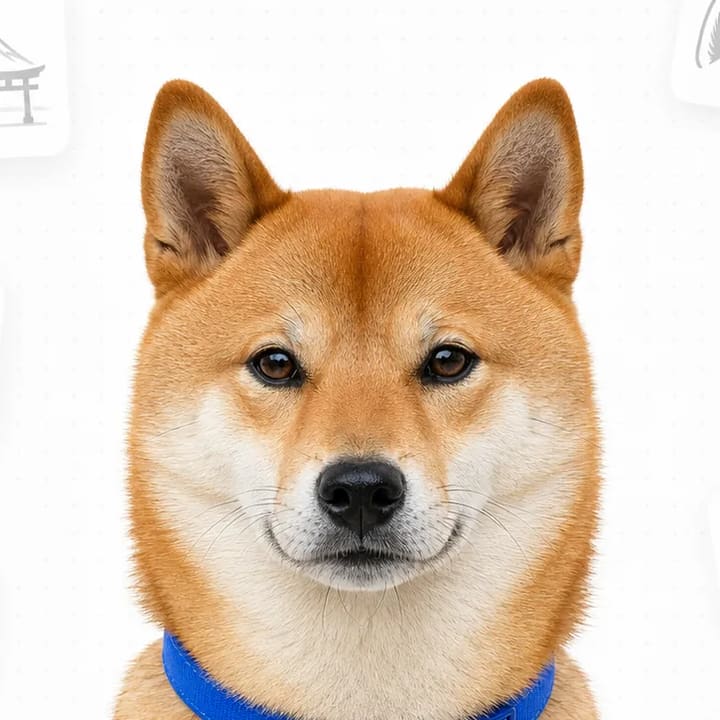
The Shiba is the smallest of the Japanese native breeds, developed to hunt by sight and scent in the brushy undergrowth of Japan's mountains. The breed nearly disappeared during and after World War II, and today's Shiba was rebuilt by combining what remained of the old regional lines, of which the Shinshu Shiba had survived best. The first documented Shiba reached the United States with a military family in 1954, and the AKC recognized the breed in 1992 as its 136th. It ranked No. 44 in the AKC's 2025 list.
Shiba buyers start with color. The standard allows three, red, sesame, and black and tan, each with urajiro, the cream to white shading on the cheeks, throat, chest, and underside. Cream, white, and pinto are serious faults in the ring, though cream can still be registered. The other conversation is temperament: the AKC says a Shiba can never be considered reliable off lead outside a confined area, and the club tells buyers to expect a breeder to discuss that Shibas may not be friendly with other dogs.
The AKC gives a life expectancy of 13 to 16 years and names allergies as the most common health problem. The National Shiba Club of America asks breeders to screen for hips, eyes, and patellas, and the club's own health overview calls patellar luxation the most prevalent of the serious conditions in the breed. It also notes that primary glaucoma is inherited and not uncommon in Shibas, and that a routine eye exam does not show which dogs will develop it.