View demoSign inGet a Free Website

Working Group

Boxer

Litters of Six or Seven, Yearly Heart Tests, One Organized Waitlist

A Boxer litter is usually six or seven puppies, it isn't unusual for one of them to be white, and every family has a view on fawn or brindle and cropped or natural ears. The careful buyers ask to see this year's Holter result. Whelpify gives your program a real website, one numbered waitlist that remembers who asked for the brindle female, and deposits through your own Stripe account, with no cut taken.

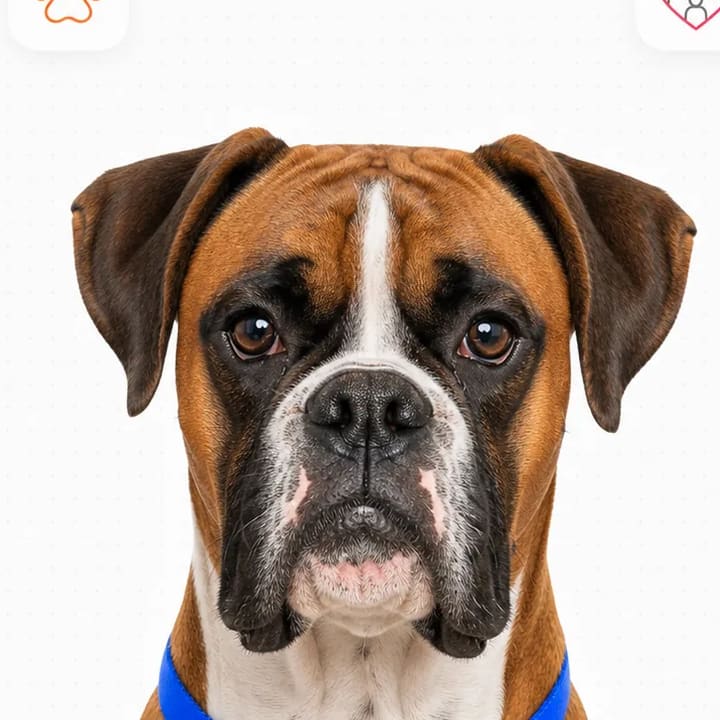
Boxer portrait
Typical litter6.6 pups
Go-home8 to 12 weeks
Size
Large
Energy
High
Temperament
Fun-loving, bright, active
Coat
Smooth
Colors
Fawn, Brindle, White, Fawn & White, Brindle & White, Reverse Brindle, Sealed Brindle

General traits of the breed. Individual dogs vary. Coat follows the breed profile.

About the breed

About the Boxer

The modern Boxer was bred down in Germany in the late 1800s from the Bullenbeisser, a heavier dog that noblemen used to run down and hold bear, bison, and wild boar. Since then the breed has worked as a cattle dog, police dog, war dog, and guide dog. The AKC registered its first Boxer in 1904, and the breed's American heyday began in the 1950s with the Westminster winner Bang Away. It ranked 18th in AKC registrations for 2025.

Boxer buyers start with color and ears. The standard allows fawn and brindle, with white markings on no more than one-third of the coat, and a plain fawn or brindle is just as correct as a flashy one. The American Boxer Club says it is not uncommon for an entirely white Boxer to turn up in a litter, its members are pledged not to breed from whites, and its code treats full AKC registration of a white as an infraction. Cropped or natural ears is the other early question, and the code says ears may be either.

The AKC gives the Boxer a life expectancy of 10 to 12 years and names the conditions responsible breeders screen for: hip dysplasia, aortic stenosis, cardiomyopathy, thyroid deficiency, degenerative myelopathy, and certain cancers. The club adds that some Boxers are sensitive to certain anesthetics and that a Boxer who faints or seems unsteady should see a vet at once, since those are often signs of an arrhythmia. The breed tolerates neither extreme heat nor cold, which belongs in what you tell each family.


Breeding today

Breeding Boxers Today

General figures for planning a litter, taken from the AKC, the American Boxer Club, and a published breeder survey. Your region, your lines, and your vet will move them.

Litter size
6.6 averageA Swedish survey of 253 Boxer litters averaged 6.6 puppies born and 5.0 registered, with about 6 percent of puppies stillborn.
Gestation
63 daysFrom ovulation, give or take a few days. Counting from the first breeding is much less exact, so progesterone timing is worth the vet visits.
Difficult whelpings
27.7%Of whelpings in that survey, most often from primary uterine inertia. A caesarean was done in 22.8 percent of all whelpings, and dystocia became more common from age four.
AKC popularity
No. 18In the 2025 ranking, after No. 17 in 2024. The breed was tenth in 2015 and 2016.
Earliest breeding
18 monthsThe club code says bitches should be bred only after 18 months and should not whelp more than twice in any three consecutive heats.
What buyers ask first
Color, then earsFawn or brindle, plain or flashy, cropped or natural, and then what heart testing the parents have had and when.

Whelping Notes for Boxers

  1. Have a plan for a whelping that stalls. In the Swedish survey more than a quarter of Boxer whelpings were difficult, usually because labor never got going, and medical treatment worked in only 5 of the 20 cases where it was tried. Know where your after-hours vet is before the due date.
  2. Decide ahead how you place a white puppy. White is a disqualification, white Boxers cannot be shown in conformation but can compete in performance events, and the club code encourages limited registration for any Boxer of a color the standard does not allow. Put all of that in writing for the family.
  3. Tails are docked within a few days of birth, and the standard allows dewclaws to be removed. Cropping, where a family wants it, is usually done under general anesthesia at six to nine weeks, and the club asks that every heart be listened to before any surgery, ear cropping included, so settle cropped or natural early and talk anesthesia through with your vet.
  4. Check the males before you promise a show prospect. In the Swedish survey 9.8 percent of male puppies born were cryptorchid.

Health testing

Health Testing for Boxers

Heart testing is what sets a Boxer program apart. The American Boxer Club's testing guidelines ask for an echocardiogram for aortic stenosis at 24 months and a Holter monitor test every year a dog is bred, on top of hips, a thyroid panel, and two recommended DNA tests.

CHIC (Canine Health Information Center) issues a number when a Boxer has the screening results OFA and the American Boxer Club recommend on file and made public, and the dog is microchipped or tattooed. The results do not have to be normal. The list covers an advanced cardiac exam by a board-certified cardiologist that includes a Holter test, the ARVC and degenerative myelopathy DNA tests, hips, and autoimmune thyroiditis. For the OFA advanced cardiac clearance, the Holter must be done within 90 days of the echocardiogram.

  • Holter MonitorOn the CHIC list. Screens for Boxer cardiomyopathy (ARVC). The club asks for it from 12 months and every year a dog is bred, reported with the date tested. The club calls the disease complex and still under study.
  • Echocardiogram for AS/SASAuscultation and a Doppler echocardiogram for aortic and subaortic stenosis, once, at 24 months or older. The club set that age because the condition can appear at sexual maturity in a dog that tested clear earlier, and it asks for the heart to be listened to at every vet visit.
  • ARVC DNAOn the CHIC list and marked recommended by the club. A one-time test reported as A/A, A/N, or N/N, now available for two variants, ARVC1 and ARVC2. Not every positive dog develops disease and some negative dogs do, so it is read alongside the Holter, not in place of it.
  • Degenerative Myelopathy DNAOn the CHIC list and marked recommended by the club. A one-time DNA test reported as A/A, A/N, or N/N.
  • Hips and ElbowsHips are on the CHIC list: OFA radiographs at 2 years or older, or PennHIP. The club's guidelines cover elbows on the same radiographs, and the AKC lists an elbow evaluation among the breed's recommended tests.
  • ThyroidOn the CHIC list. A full thyroid panel, including thyroglobulin autoantibodies and cTSH, at 2 years and then annually for breeding dogs.

Each dog record has a health section for results, registry numbers, and uploaded certificates. The public parent page shows what you choose to publish, and every puppy from that pairing links back to it. How dog records work

Your website

Your Boxer Website, Built for You

Share your photos and a little about your dogs, and we design your website for you, free. You look it over before your plan starts.

  • Pages for your puppies, litters and parent dogs
  • Your application and waitlist built in
  • Yours to edit, any time
evergreengoldens.whelpify.com
The Evergreen Goldens demo website, with a family and their golden retrievers in the hero photo
The Evergreen Goldens demo website. Yours is designed around your own dogs.

Built for you, freeReview the design before your plan starts

How it fits

How Whelpify Fits a Boxer Program

Three parts of a Boxer program that take the most keeping track of, and how Whelpify handles each one.

Brindle · FFawn · MFawn · anyFlashy preferredNatural earsSpring litter

Preferences captured on the application, used to notify matching families

Preferences

Who Asked for the Flashy Brindle Female

Your application captures each family's color and sex preference, their timing, and notes such as cropped or natural ears. When a puppy becomes available, the families whose preferences match are told first, and the final match is yours. With six or seven puppies and twice as many opinions, that saves scrolling back through months of messages.

  • HolterTested Mar 2027
  • Echo (AS/SAS)Normal
  • ARVC DNAN/N
  • DM DNAA/N
  • HipsOFA Good
  • ThyroidPending

Health

Holter Dates and DNA Results on the Parent Page

The club asks for every Boxer heart result to be reported with the date tested, and buyers look for a recent one. Enter each parent's Holter and echocardiogram results with their dates, add the ARVC and DM results, hips, and thyroid, and upload the certificates. The public parent page shows what you choose to publish, and every puppy from that pairing links back to it.

  • 1The BrandtsApplied Jan 9 · brindle female#1 · Deposit paid
  • 2K. OseiApplied Jan 27 · fawn male#2 · Approved
  • 3Marlow familyApplied Feb 11 · either color#3 · Approved
  • 4T. RuizApplied Mar 2 · fawn, natural ears#4 · Follow up

Waitlist

One Numbered List for a Litter of Seven

Every inquiry and application lands in one numbered list with a status and notes. Reorder it yourself, set follow-up reminders, and merge the family who emailed and then applied. When the litter arrives, offer each puppy to a family with a response window and work down the list.

Ready for the breed

Set Up for the Boxer From Day One

Choose Boxer as your breed and its colors are already in your forms. This is the form a family fills in on your website, and what you see on your side.

your-kennel.com/waitlist

Join the Waitlist

Tell us what you are hoping for in your Boxer puppy.

Preferred Gender
Preferred Colors
whelpify.com/dashboard/waitlist
#4TPThe ParkersLooking for: female · fawnInquiry

Try it. Pick a color or two, the way a family would.

  1. The Breed’s Own ColorsYour waitlist form offers the 7 colors Whelpify keeps for the Boxer. Change the list in Settings, or let families add their own.
  2. Saved With Their Place in LineWhat a family picks shows on their row, so when a litter arrives you can see who hoped for what.

The same colors are offered when you add a dog, a litter or a puppy.

Good to know

Questions Breeders Ask

Something we did not cover?Write to us. A person replies within one business day.

Contact Us

Yes. Each dog record has a health section where you enter results and registry numbers and upload certificates, so a Holter result can carry the date it was done. What you publish appears on that dog's public page, and every puppy from the pairing links back to it.

Yes. Your application captures color and sex preferences along with timing and notes. When a puppy that matches becomes available, those families are told first. Final matching is always your call.

Log weigh-ins and photos on each puppy and the litter page updates for everyone waiting. Each family also has one message thread with you, so questions and answers stay in one place.

Yes. Your contract becomes a signable online form with your terms shown word for word. Families sign with a typed legal name and date from their phone, and both of you keep a copy in the family's file.

No. Stripe is built in if you want card payments straight to your own account, and you can also mark a deposit received for Zelle, Venmo, PayPal, Cash App, or check. Whelpify takes no cut of your sales either way.

Yes. Each female has a heat-cycle tab with her history and a reminder before her next heat is due, which helps when you're following the club's limit of two litters in any three consecutive heats.

Planning a litter? Our heat cycle, whelping date, puppy weight and milestones calculators are free for anyone to use.Free Tools

Keep looking

More Working Breeds

All 203 Breeds
Time back

Less Paperwork,
More Time With Your Dogs

Bring your website, puppy listings, applications and payments together today. Go annual and claim your free custom domain after your first payment.