The club calls the Greater Swiss the oldest Swiss breed. By the 1800s these big farm and draft dogs were known as Metzgerhunde, or butcher's dogs, but by 1900 their numbers had dwindled. Two "short-haired Bernese" shown at the Swiss Kennel Club's jubilee show in 1908 caught the eye of Professor Albert Heim, the breed entered the Swiss stud book in 1909, and the Swiss Army used it as a draft dog in World War II. The first Swissies came to the U.S. in 1968, the AKC recognized the breed in 1995, and it ranked No. 71 in the AKC's 2025 list.
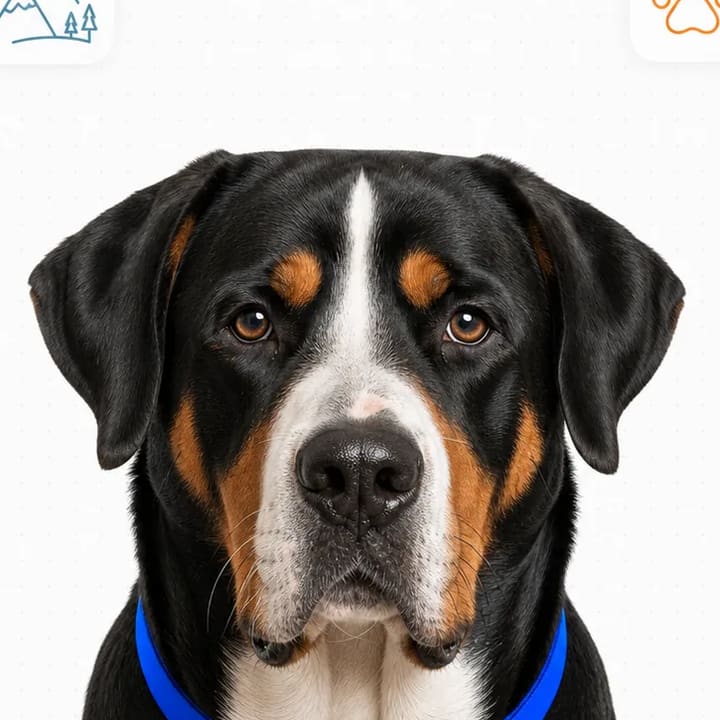
There is only one correct color: a black topcoat with rich rust and white markings, usually with a white blaze, a white chest, white feet, and a white tail tip. The standard disqualifies red and white and blue (charcoal), red and white, and blue eyes, and says markings matter less than working ability. So buyers ask about sex, size, and temperament instead, and the well-read ones know the breed house-trains slowly, does not handle heat well, and thrives on carting, hiking, and herding.
The AKC gives a life expectancy of 8 to 11 years, and the club's health statement says many Swissies live 8 to 12 years or more. The club recommends screening breeding dogs for hips, elbows, shoulders, and eyes. It names splenic torsion, which is rare in other breeds, along with bloat, distichiasis, urinary incontinence, epilepsy, and the frantic licking episodes owners call lick fits.