View demoSign inGet a Free Website

Working Group

Black Russian Terrier

A Guardian Breed, Two-Year Clearances, One List of Vetted Homes

Black Russian Terriers are a guardian breed, so placing a litter is mostly about finding owners who can train and socialize a dog this size, and the informed buyers ask for hips, elbows, and the JLPP result by name. Whelpify gives your program a real website, one waitlist with your notes on every family, and deposits through your own Stripe account, with no marketplace cut.

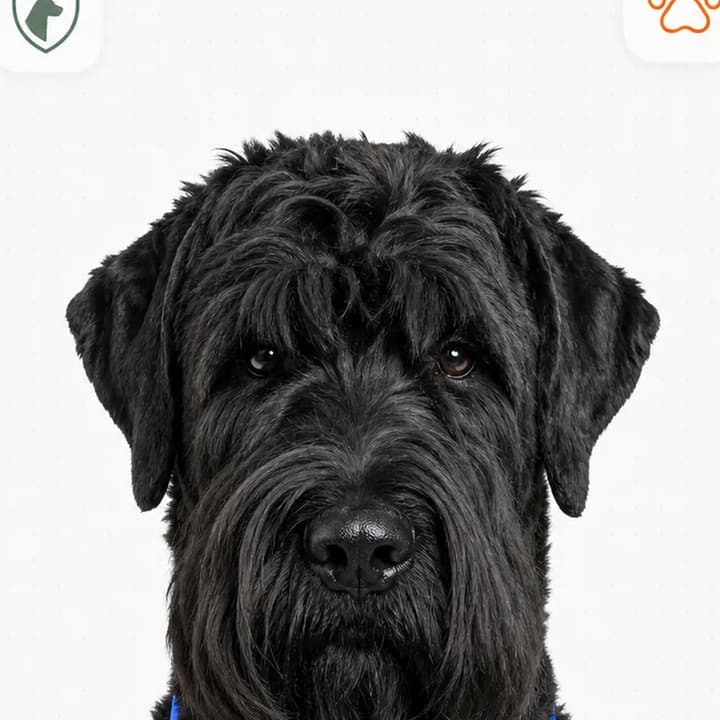
Black Russian Terrier portrait
AKC popularityNo. 154
Go-home8 weeks
Size
Giant
Energy
Moderate
Temperament
Intelligent, calm, powerful
Coat
Curly Double
Colors
Black, Black & Gray

General traits of the breed. Individual dogs vary. Coat follows the breed profile.

About the breed

About the Black Russian Terrier

The Black Russian Terrier was made to order by the Soviet army. After World War II its Red Star Kennel near Moscow bred a multipurpose military dog from more than 17 breeds, including the Giant Schnauzer, Airedale, Rottweiler, and Newfoundland, and the dogs guarded borders, prisons, and military sites. The first standard appeared in 1958, Russia recognized the breed in 1981, and the AKC admitted it to the Working Group in 2004. It ranked No. 154 in the AKC’s 2025 list.

Buyers who know the breed are not shopping for a big shaggy pet. The BRT was bred to guard and protect, is naturally aloof with strangers, and the AKC is blunt that an owner who will not train a powerful, willful dog should not get one, so socialization from puppyhood and an experienced home are the first conversation. The coat is the second: a double coat with a fall, beard, and mustache that needs brushing once or twice a week and regular scissoring. Color is never a choice, because the standard allows only solid black or black with scattered gray hairs.

The AKC gives a life expectancy of 10 to 12 years. The Black Russian Terrier Club of America calls the breed robust and generally healthy and names hip and elbow dysplasia as its primary problems; in OFA’s statistics, 37.8 percent of 1,339 BRT hip films were read as dysplastic. The club also lists juvenile laryngeal paralysis and polyneuropathy (JLPP), a recessive nerve disease with a DNA test, and names Addison’s disease, cancer, epilepsy, and bloat as other issues seen in the breed.


Breeding today

Breeding Black Russian Terriers Today

General figures for planning a litter, taken from the AKC, OFA, and the Black Russian Terrier Club of America. Your region and your lines move them, and with a breed this rare, so does the timing of every other litter in the country.

Litter size
VariesNo BRT figure from the club or a veterinary source was found. For giant breeds as a class, a Norwegian study of 10,810 litters found an average of 7.1 puppies at birth.
Gestation
63 daysFrom ovulation, give or take a few days. Counted from the first breeding the range is 58 to 72 days, so progesterone timing pays for itself.
AKC popularity
No. 154In the 2025 rankings, down from No. 127 in 2024, out of 202 ranked breeds.
Hip and elbow age
24 monthsThe club’s minimum age for the OFA hip and elbow evaluations, so a full set of clearances means waiting until a dog is two.
JLPP carriers
23.3%Of 969 BRTs with JLPP results in OFA’s statistics, 226 were carriers. Carriers bred to clear dogs produce no affected puppies.
What buyers ask first
Temperament, then healthHow the parents behave with strangers, what socialization the puppies get, and then the hip, elbow, and JLPP results.

Whelping and Raising Notes for Black Russian Terriers

  1. JLPP shows up after go-home. The club says signs usually begin at about three months, and two carriers can expect about a quarter of their puppies affected. Test both parents so the question is settled before the breeding, not in a buyer’s kitchen.
  2. Because so many breeds went into the BRT, colors other than black can still appear. The standard disqualifies anything but solid black or black with scattered gray, which is why the club’s CHIC list includes DNA tests at the K and agouti loci.
  3. The standard allows a docked tail of 3 to 5 vertebrae or a natural tail, which is not penalized, and says front dewclaws should be removed. Cropped ears are not acceptable. Note your choice on each puppy so families know what they are getting.
  4. Protective instincts start young. The AKC says socialization has to begin in puppyhood and continue for life, so the weeks before go-home and the advice you send home with each puppy matter more than in most breeds.

Health testing

Health Testing for Black Russian Terriers

The Black Russian Terrier Club of America sets out its CHIC requirements in a health statement its board approved in August 2025. Hips, elbows, eyes, cardiac, the JLPP DNA test, and DNA color testing are required, and a hyperuricosuria test is recommended.

CHIC (Canine Health Information Center) issues a number when a BRT has the club’s required results on file with OFA: hips and elbows from 24 months, an eye exam by an ACVO ophthalmologist, a cardiac exam from 12 months, the JLPP DNA test, and DNA tests for the K and agouti loci, plus a microchip or tattoo. OFA’s breed table also lists hyperuricosuria, while the club’s statement calls it recommended but not required. The club asks buyers to check results on OFA rather than take a breeder’s word for them.

  • HipsRequired. An OFA evaluation at a minimum of 24 months. Of 1,339 BRT hip films in OFA’s statistics, 37.8 percent were read as dysplastic.
  • ElbowsRequired. An OFA evaluation at a minimum of 24 months. Of 1,223 elbow evaluations in OFA’s statistics, 28.9 percent were abnormal.
  • EyesRequired. An exam by a board-certified ACVO ophthalmologist, recorded with OFA. The club’s statement says yearly certification is required.
  • CardiacRequired. A basic exam or an advanced exam with an echocardiogram, at a minimum of 12 months. The club recommends a board-certified cardiologist for either.
  • Juvenile Laryngeal Paralysis and PolyneuropathyRequired. A breed-specific DNA test for JLPP. The disease is recessive, so carriers can be bred to clear dogs without producing affected puppies.
  • Dominant Black and AgoutiRequired. DNA tests at the K and agouti loci, registered with OFA, which help a breeder keep the black coat the standard demands.
  • Hyperuricosuria (HUU)Recommended by the club, not required by its statement. A DNA test many breeders use, which the club notes is not specific to Black Russian Terriers.

Each dog record has a health section for results, registry numbers, and uploaded certificates. The public parent page shows what you choose to publish, and every puppy from that pairing links back to it. How dog records work

Your website

Your Black Russian Terrier Website, Built for You

Share your photos and a little about your dogs, and we design your website for you, free. You look it over before your plan starts.

  • Pages for your puppies, litters and parent dogs
  • Your application and waitlist built in
  • Yours to edit, any time
evergreengoldens.whelpify.com
The Evergreen Goldens demo website, with a family and their golden retrievers in the hero photo
The Evergreen Goldens demo website. Yours is designed around your own dogs.

Built for you, freeReview the design before your plan starts

How it fits

How Whelpify Fits a Black Russian Terrier Program

Three parts of a BRT breeder’s week that take the most back-and-forth, and what Whelpify does with each.

  • HipsGood
  • ElbowsNormal
  • JLPPCarrier
  • EyesAnnual exam due
  • CardiacNormal
  • K and A locusOn file

Health

JLPP and OFA Results on Every Parent Page

Enter the hip, elbow, eye, and cardiac results, the JLPP test, and the color DNA results once on each sire and dam, with registry numbers and the certificates themselves. The public parent page shows what you choose to publish, and every puppy from that pairing links back to it, so the buyer who asks about JLPP finds the answer before emailing.

  • 1The HarlowsApplied Feb 3 · male, owned a Giant Schnauzer#1 · Deposit paid
  • 2D. AchterbergApplied Feb 19 · female, fenced acre#2 · Approved
  • 3Pruett familyApplied Mar 7 · either sex, first BRT#3 · Visit set
  • 4L. MoreauApplied Mar 22 · male, training plan#4 · Follow up

Waitlist

One List for Homes You Have Vetted

Every inquiry and application lands in one numbered list with a status and your notes, which is where you record a family’s experience with large guardian dogs, their fencing, and their training plans. Reorder it yourself, set a follow-up reminder for the family still meeting your dogs, and merge the person who emailed and then applied twice.

  1. Day 0Birth weights logged on each puppy
  2. Early weeksTail and dewclaws noted per puppy
  3. WeeklyWeigh-ins and photos on the litter page
  4. Week 7Puppies offered with a response window
  5. Week 8Balances requested, go-home

Litter Updates

Weekly Photos From Whelping to Go-Home

Log weigh-ins and photos on each puppy record, and the litter page your families follow updates with them. For buyers who have waited months for a litter, seeing each puppy grow and meet new people is the best answer to the question they keep asking.

Ready for the breed

Set Up for the Black Russian Terrier From Day One

Choose Black Russian Terrier as your breed and its colors are already in your forms. This is the form a family fills in on your website, and what you see on your side.

your-kennel.com/waitlist

Join the Waitlist

Tell us what you are hoping for in your Black Russian Terrier puppy.

Preferred Gender
Preferred Colors
whelpify.com/dashboard/waitlist
#4TPThe ParkersLooking for: female · blackInquiry

Try it. Pick a color or two, the way a family would.

  1. The Breed’s Own ColorsYour waitlist form offers the 2 colors Whelpify keeps for the Black Russian Terrier. Change the list in Settings, or let families add their own.
  2. Saved With Their Place in LineWhat a family picks shows on their row, so when a litter arrives you can see who hoped for what.

The same colors are offered when you add a dog, a litter or a puppy.

Good to know

Questions Breeders Ask

Something we did not cover?Write to us. A person replies within one business day.

Contact Us

Yes. Each dog record has a health section where you enter results and registry numbers and upload certificates, including the JLPP and color DNA results. What you publish appears on that dog’s public page, and every puppy from that pairing links back to it.

Every family sits in one numbered waitlist with a status and notes, so you can record their experience, fencing, and whether they have met your dogs. You reorder the list, set follow-up reminders, and decide which family is offered which puppy.

Yes. You add each result to the dog’s health section when you have it, with the registry number and certificate, and choose what shows on the public page.

Yes. Each female has a heat-cycle tab with her history, and you get a reminder before her next heat is due.

No. Stripe is built in if you want card payments straight to your own account, and you can also mark a deposit received for Zelle, Venmo, PayPal, Cash App, or check. Whelpify takes no cut of your sales either way.

Yes. Your contract becomes a signable online form with your terms shown word for word, which fits the club’s advice that all agreements be in writing. Families sign with a typed legal name and date, and both of you keep a copy.

Planning a litter? Our heat cycle, whelping date, puppy weight and milestones calculators are free for anyone to use.Free Tools

Keep looking

More Working Breeds

All 203 Breeds
Time back

Less Paperwork,
More Time With Your Dogs

Bring your website, puppy listings, applications and payments together today. Go annual and claim your free custom domain after your first payment.