View demoSign inGet a Free Website

Working Group

Standard Schnauzer

The Original Schnauzer, a Rare Breed, and One Waitlist

The club says the Standard has never been a popular breed in the U.S., so most puppies come from a small number of serious breeders, and it asks for hips, a recent eye exam, and a DCM DNA test on every dog that is bred. Families ask for pepper and salt or black, then docked or natural tail now that the standard allows both. Whelpify gives your program a real website, one waitlist that keeps families in order between litters, and deposits through your own Stripe account, with no cut taken.

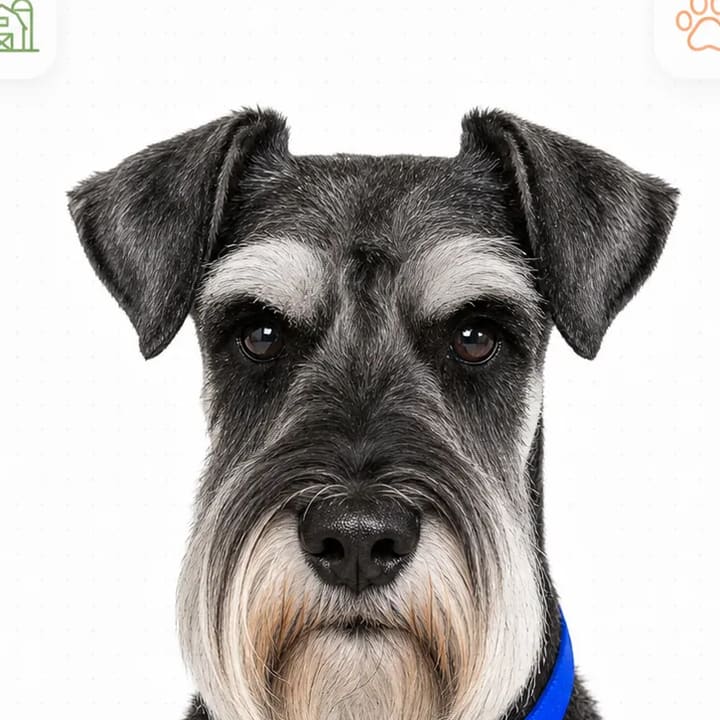
Standard Schnauzer portrait
AKC popularityNo. 93
Go-home8 weeks
Size
Medium
Energy
High
Temperament
Fearless, smart, spirited
Coat
Wiry Double
Colors
Salt & Pepper, Black

General traits of the breed. Individual dogs vary. Coat follows the breed profile.

About the breed

About the Standard Schnauzer

The Standard is the original Schnauzer, the prototype for the Miniature and the Giant. Dogs very like it guarded farms, killed vermin, and went to market with their owners in Germany from the Middle Ages, and the club says fanciers in the mid-1800s crossed in the gray Wolfspitz and the black German Poodle to fix the pepper and salt and black colors. Shown first as the Wire-haired Pinscher in the 1870s, the breed was recognized by the AKC in 1904, moved to the Terrier Group in 1926, and went back to the Working Group in 1946. It ranked No. 93 in the AKC's 2025 list.

Buyers ask about color, tail, and ears. The standard allows pepper and salt or pure black, in all shades from dark iron gray to silver gray, and the current standard, approved in 2022, accepts a docked tail of one to two inches or a natural one, with a saber or sickle tail preferred. Ears may be cropped or uncropped. Size is strict: a male under 18 or over 20 inches, or a female under 17 or over 19, is disqualified. Informed buyers also know that a clippered coat goes soft and lighter, and that a hand-stripped coat keeps its texture and color.

The AKC gives a life expectancy of 13 to 16 years and says the club's health surveys, run every five years, show a very healthy breed. The inherited disease breeders screen for by DNA is dilated cardiomyopathy (DCM): in a 2022 study of 1,834 genotyped Standards, 21.2 percent carried the variant, and dogs with two copies had a median lifespan of about three years. The club's best practices, approved in February 2024, require hips, a current eye exam, and the DCM DNA test for every dog used for breeding.


Breeding today

Breeding Standard Schnauzers Today

General figures for planning a litter, taken from the AKC, the Standard Schnauzer Club of America, and published research. Your region and your lines will move them.

Litter size
Not publishedNeither the AKC nor the club gives a figure for the breed. Breed-info sites disagree, so plan from your own lines and your vet's count.
Gestation
63 daysFrom ovulation. Counted from the first breeding the AKC gives 58 to 72 days, so progesterone timing gives a much closer due date.
AKC popularity
No. 93In the 2025 rankings. The club says the breed has never been popular in the U.S., which is why most puppies come from serious breeders.
Eye exam window
12 monthsClub rule: a dog under 7 needs an exam by a board-certified ophthalmologist no more than 12 months before it is bred. A dog 7 or older needs one done at 7 or later.
DCM variant
21.2% positiveOf 1,834 Standards genotyped from 2013 to 2018, 361 were carriers and 28 had two copies. The club says two carriers should never be bred.
What buyers ask first
Color, then tailPepper and salt or black, docked or natural, cropped or natural ears, and then how long the wait is for the next litter.

Whelping and Raising Notes for Standard Schnauzers

  1. Decide on tails before the litter arrives. The 2022 standard accepts a docked tail of one to two inches or a natural one, and front dewclaws may be removed, so set your policy with your vet and put it on your site.
  2. Check DCM results before the pairing, not after. In a study of 15 affected Standards, the median age at diagnosis was 1.6 years and all developed congestive heart failure. The variant is recessive, so a carrier bred to a clear dog produces no affected puppies.
  3. Plan the coat talk early. The AKC says clippering makes the coat soft and lighter with each clip, while a hand-stripped coat can be kept for a long time with brushing and plucking. Tell families which one you recommend before they book a groomer.
  4. Send puppies home with the basics in writing. The club requires its breeders to give new owners information on feeding, health, training, and puppy care, and the AKC calls early socialization a must for this clever, strong-willed breed.

Health testing

Health Testing for Standard Schnauzers

The Standard Schnauzer Club of America's best practices for health testing, revised in December 2023 and approved by its board in February 2024, require three tests for every dog used for breeding and ask breeders to make the results available in the OFA database.

The club requires these tests of breeding dogs whatever their CHIC status. OFA's CHIC list asks for the same three: an OFA hip evaluation, with PennHIP welcome as an extra but not in its place, an eye exam at 12 months or older, and the DCM DNA test. Elbows, a cardiac exam, thyroid, and a sample for the OFA DNA repository are optional. What the club does say plainly: if one parent is a DCM carrier, the other must be clear, and two carriers should never be bred.

  • HipsRequired. Hip X-rays evaluated by OFA. A dog under two may be bred on a preliminary OFA grade of Excellent, Good, or Fair; a dog over two has an OFA number.
  • Eye Exam (Under 7 Years)Required. An evaluation by a board-certified ophthalmologist no more than 12 months before the dog is bred. Frozen semen breedings must meet the same rule unless the sire died before February 12, 2024.
  • Eye Exam (7 Years and Older)Required. For a dog 7 or older, the board-certified ophthalmologist exam must have been done at 7 years of age or later.
  • Dilated Cardiomyopathy (DCM)Required. A DNA test for the RBM20 variant. The AKC calls the disease a simple recessive in the breed, so carriers can be bred to clear dogs without producing affected puppies.

Each dog record has a health section for results, registry numbers, and uploaded certificates. The public parent page shows what you choose to publish, and every puppy from that pairing links back to it. How dog records work

Your website

Your Standard Schnauzer Website, Built for You

Share your photos and a little about your dogs, and we design your website for you, free. You look it over before your plan starts.

  • Pages for your puppies, litters and parent dogs
  • Your application and waitlist built in
  • Yours to edit, any time
evergreengoldens.whelpify.com
The Evergreen Goldens demo website, with a family and their golden retrievers in the hero photo
The Evergreen Goldens demo website. Yours is designed around your own dogs.

Built for you, freeReview the design before your plan starts

How it fits

How Whelpify Fits a Standard Schnauzer Program

Three parts of a Standard Schnauzer breeder's year that take the most tracking, and what Whelpify does with each.

Pepper and salt · MBlack · FPepper and salt · anySpring 2028Note: natural tailNote: barn hunt home

Preferences captured on the application, used to notify matching families

Preferences

Who Asked for the Black Female With a Natural Tail

Your application captures each family's color and sex preference, their timing, and notes, which is where they tell you docked or natural, cropped or natural, and what sport they have in mind. When a puppy becomes available, the families whose preferences match are told first, and the final match is still yours to make.

  • HipsExcellent
  • EyesNormal
  • DCM (RBM20)Carrier
  • Sire DCMClear
  • Next eye examDue before breeding

Health

Hips, Eyes, and DCM on Every Parent Page

Enter the hip result, each new eye exam, and the DCM genotype once on each sire and dam, with registry numbers and the certificates themselves. Because the club wants a recent eye exam before every breeding, you add the new one to the same record. The public parent page shows what you choose to publish, and every puppy from that pairing links back to it.

  1. Before heatReminder sent, eye exam date checked
  2. Day 0Litter born, birth weights logged
  3. Week 4Photos and weigh-ins on the litter page
  4. Week 7Offers sent with a response window
  5. Week 8+Go-home day

Timeline

From Eye Exam to Go-Home Day

Each female's heat-cycle tab keeps her history and reminds you before her next heat, which is your cue to check that her eye exam is current. Once the litter arrives, log weigh-ins and photos on each puppy, the litter page updates as they grow, and every family's questions stay in one message thread.

Ready for the breed

Set Up for the Standard Schnauzer From Day One

Choose Standard Schnauzer as your breed and its colors are already in your forms. This is the form a family fills in on your website, and what you see on your side.

your-kennel.com/waitlist

Join the Waitlist

Tell us what you are hoping for in your Standard Schnauzer puppy.

Preferred Gender
Preferred Colors
whelpify.com/dashboard/waitlist
#4TPThe ParkersLooking for: female · salt & pepperInquiry

Try it. Pick a color or two, the way a family would.

  1. The Breed’s Own ColorsYour waitlist form offers the 2 colors Whelpify keeps for the Standard Schnauzer. Change the list in Settings, or let families add their own.
  2. Saved With Their Place in LineWhat a family picks shows on their row, so when a litter arrives you can see who hoped for what.

The same colors are offered when you add a dog, a litter or a puppy.

Good to know

Questions Breeders Ask

Something we did not cover?Write to us. A person replies within one business day.

Contact Us

Yes. Your application captures color and sex preferences along with timing and notes, and the notes are where a family tells you about tails and ears. When a puppy that matches their color and sex goes available, those families are told first. Final matching is always your call.

Yes. Each dog record has a health section where you enter results and registry numbers and upload certificates, including each new eye exam. What you publish appears on that dog's public page, and every puppy from that pairing links back to it.

Yes. The waitlist is one numbered list across all your litters, with a status and notes for each family. You offer specific puppies to specific families, and anyone who passes stays on the list for the next litter without applying again.

Yes. The breed's colors are choices on dog and puppy records, so each puppy is listed under the color you pick for it.

No. Stripe is built in if you want card payments straight to your own account, and you can also mark a deposit received for Zelle, Venmo, PayPal, Cash App, or check. Balance requests go out on the date you choose, and Whelpify takes no cut of your sales.

Yes. Your contract becomes a signable online form with your own terms shown word for word, so the price, your guarantee, and your return conditions are there for the family to read and sign, and both of you keep a copy.

Planning a litter? Our heat cycle, whelping date, puppy weight and milestones calculators are free for anyone to use.Free Tools

Keep looking

More Working Breeds

All 203 Breeds
Time back

Less Paperwork,
More Time With Your Dogs

Bring your website, puppy listings, applications and payments together today. Go annual and claim your free custom domain after your first payment.