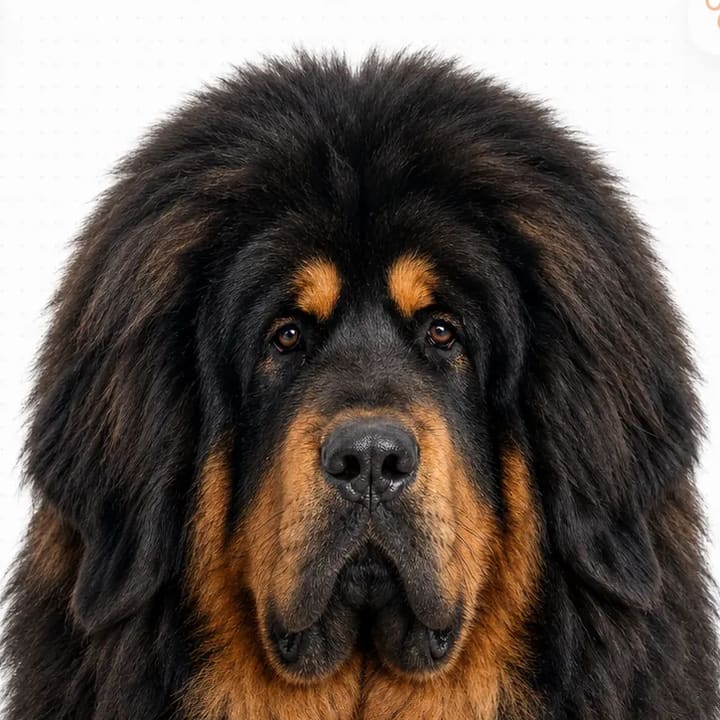
For millennia the Tibetan Mastiff guarded homesteads and the tents of Himalayan herders and traders against wolves and snow leopards, and it is thought to be a forerunner of many modern mastiffs. Lord Hardinge sent one to Queen Victoria in 1847, and imports from Nepal and India began reaching the United States in 1970. The AKC recognized the breed in 2006 as its 155th, and it ranked No. 142 in the AKC’s 2025 list.
Good buyers already know this is a guardian, not an obedience dog. The American Tibetan Mastiff Association tells them plainly that a TM may never be walked off leash, will not come when called, barks at night, and can become unmanageable by two or three if it is not socialized. They ask about the coat, which blows once a year, and about color: black, brown, and blue/gray, each with or without tan markings, and gold from pure golden to rich red gold. White, cream, wolf sable, brindle, and particolors disqualify.
The AKC gives a life expectancy of 10 to 12 years and calls the breed relatively healthy. The parent club asks breeders to screen for hip dysplasia and hypothyroidism before every breeding, and recommends elbows and eyes; in OFA’s statistics, 16.8 percent of 1,414 TM hip films were read as dysplastic. TMs also mature slowly, with females reaching full maturity at three to four years and males at four to five.