View demoSign inGet a Free Website

Herding Group

Australian Cattle Dog

Blue or Red, Working or Sport, One Waitlist for Every Litter

Cattle dog puppies are born white, so families wait on the litter page to see blue or red come in, and the informed ones ask for BAER, PLL, and PRA results before they ask the price. Whelpify gives your program a real website, one waitlist that remembers who wanted the red speckle female for the ranch, and deposits through your own Stripe account, with no marketplace cut.

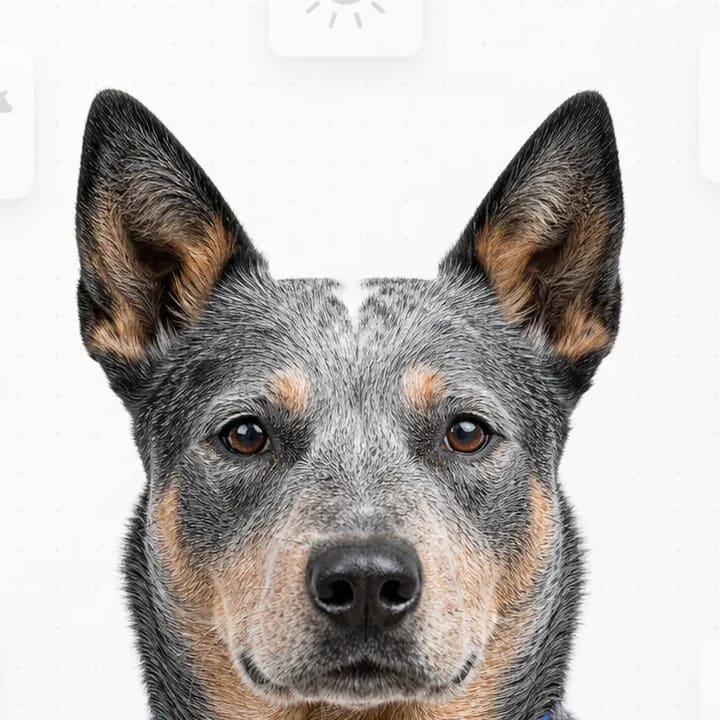
Australian Cattle Dog portrait
AKC popularityNo. 47
Go-home8 weeks
Size
Medium
Energy
Very high
Temperament
Alert, curious, pleasant
Coat
Smooth Double
Colors
Blue, Blue Mottled, Blue Speckled, Red Speckled, Red Mottled

General traits of the breed. Individual dogs vary. Coat follows the breed profile.

About the breed

About the Australian Cattle Dog

Stockmen moving cattle into Australia's inland grasslands in the 1800s found the imported British Smithfield dog could not handle the heat, the rough ground, or the distances. They crossed Smithfields with Dingoes and Collies, the Bagust brothers later added Dalmatian, and a sheepdog known as the Black and Tan Kelpie went into the line as well. The AKC admitted the breed in 1980, it became a charter member of the Herding Group in 1983, and it ranked No. 47 in the AKC's 2025 list.

Buyers know the breed as the Blue Heeler, Red Heeler, or Queensland Heeler, and most arrive with a color in mind. The standard allows blue, blue mottled, or blue speckled with black, blue, or tan markings, and red speckle with or without darker red head markings. The AKC notes there is no difference in temperament between blues and reds, so the more useful early question is what the dog will do: a working stock dog, a sport partner, or an active family's running companion.

The AKC gives a life expectancy of 12 to 16 years, and Dogs NSW, the kennel council in New South Wales, calls the breed hardy and says it commonly lives to 15 or more. The inherited problems breeders screen for are hip and elbow dysplasia, progressive retinal atrophy, primary lens luxation, and congenital deafness. The Australian Cattle Dog Club of America requires tests for all of them, including a BAER hearing test, before a breeder can join its Breeder of Heart program.


Breeding today

Breeding Australian Cattle Dogs Today

General figures for planning a litter, taken from the AKC and the Australian Cattle Dog Club of America. Your region, your lines, and whether you breed for stock work, sport, or the show ring all move them.

Gestation
63 daysFrom ovulation. Counting from the first breeding gives a range of 58 to 72 days, so progesterone timing is worth it when the due date matters.
AKC popularity
No. 47In the 2025 rankings, up from No. 49 in 2024 and No. 52 in 2023.
Breeding age
1 year and upThe club's code of ethics says a sire should not be bred before one year of age and a bitch not before her second season.
Hip and elbow films
2 yearsThe minimum age for OFA hips and elbows on the club list. PennHIP can be done from one year, and the eye exam also waits until 24 months.
Puppy hearing test
6 to 8 weeksThe club says puppies can be BAER tested at this age, so the result can be in hand before a puppy goes home.
What buyers ask first
Blue or redThen whether the puppy is meant for stock, sport, or a busy household, and then the BAER result.

Whelping and Raising Notes for Australian Cattle Dogs

  1. Puppies are born white, with only their black or red head markings and any body patches showing. The true color begins to show at about three weeks, so a weekly photo on each puppy is what keeps a color-specific waitlist patient.
  2. Schedule BAER testing before go-home. The club notes that puppies can be tested at 6 to 8 weeks, and a family that wanted a stock dog or a sport prospect will want to see the hearing result in each ear.
  3. PRA and PLL are DNA tests, so puppies can be tested as well as parents. The club says carriers make fine pets but should only be bred to clear dogs, and it accepts generations of testing behind an obligate clear puppy if you can show the pedigree.
  4. This is a high-drive breed that the AKC says is only really happy on the job. Ask on the application about stock, sport, or daily running, and start socialization early, since the breed is naturally wary of strangers.

Health testing

Health Testing for Australian Cattle Dogs

The Australian Cattle Dog Club of America lists six required tests for CHIC, and the same six are required for its Breeder of Heart program, last updated by the club's board in April 2024. The club also lists four optional tests for less common disorders.

CHIC (Canine Health Information Center) issues a number when a cattle dog has the club's required results on file with OFA: hips, elbows, an eye exam, a BAER hearing evaluation, and the PRA (prcd) and primary lens luxation DNA tests. Patellas, a cardiac exam, the RCD4 PRA DNA test, and a hock OCD consultation are optional. OFA's own CHIC list matches, except that it accepts OFA rather than OVC hip and elbow evaluations and does not list the hock OCD consultation, which the club's page still includes. A CHIC number on a parent's page is the shortest way to say "we did the work."

  • HipsRequired. An OFA or OVC evaluation at a minimum of 2 years, or a PennHIP evaluation at a minimum of 1 year. A PennHIP done at 6 months measures laxity but does not meet the requirement.
  • ElbowsRequired. An OFA or OVC elbow evaluation at two years or older.
  • EyesRequired. An eye examination by a boarded ACVO ophthalmologist at a minimum age of 24 months, registered with OFA.
  • Congenital Deafness (BAER)Required. An OFA evaluation based on a BAER test of hearing in each ear. The club notes that puppies can be tested at 6 to 8 weeks.
  • Progressive Retinal AtrophyRequired. A DNA test for the prcd form of PRA from an approved laboratory, registered with OFA. It causes blindness, usually in middle-aged or older dogs.
  • Primary Lens LuxationRequired since October 2014. A DNA test for a painful eye disease in which the lens is displaced. Puppies can be tested as well as parents.
  • Patellas, Cardiac, RCD4, and Hock OCDOptional. An OFA patella evaluation at a minimum of 1 year, a congenital or advanced cardiac exam, the RCD4 PRA DNA test, and a radiographic consultation for osteochondritis dissecans of the hock.

Each dog record has a health section for results, registry numbers, and uploaded certificates. The public parent page shows what you choose to publish, and every puppy from that pairing links back to it. How dog records work

Your website

Your Australian Cattle Dog Website, Built for You

Share your photos and a little about your dogs, and we design your website for you, free. You look it over before your plan starts.

  • Pages for your puppies, litters and parent dogs
  • Your application and waitlist built in
  • Yours to edit, any time
evergreengoldens.whelpify.com
The Evergreen Goldens demo website, with a family and their golden retrievers in the hero photo
The Evergreen Goldens demo website. Yours is designed around your own dogs.

Built for you, freeReview the design before your plan starts

How it fits

How Whelpify Fits an Australian Cattle Dog Program

Three parts of a cattle dog breeder's week that take the most back-and-forth, and what Whelpify does with each.

Blue · MBlue speckled · FRed speckle · FSummer 2027Note: working cattleNote: agility home

Preferences captured on the application, used to notify matching families

Preferences

Who Asked for the Red Speckle Female

Your application captures each family's color and sex preference, their timing, and notes, which is where they tell you about the cattle, the agility club, or the daily ten-mile run. When a puppy becomes available, the families whose preferences match are told first, and the final match is yours to make.

  1. Day 0Born white, head markings showing
  2. Week 1First weigh-ins logged on each puppy
  3. Week 3Color starts to show, new photos posted
  4. Week 6 to 8BAER test, offers sent with a response window
  5. Week 8Balances requested, go-home

Litter Updates

Weekly Photos as the Color Shows

Log weigh-ins and photos on each puppy record, and the litter page families follow updates with them. A waitlist that has only seen white puppies with black or red heads can watch the blue or red come in from week three, and you are not answering the same question in six text threads.

  • HipsGood
  • ElbowsNormal
  • EyesNormal
  • BAERNormal, both ears
  • PLLClear
  • PRA-prcdCarrier

Health

Six CHIC Results on Every Parent Page

Enter the hip, elbow, eye, and BAER results and the PRA and PLL DNA tests once on each sire and dam, with registry numbers and the certificates themselves. The public parent page shows what you choose to publish, and every puppy from that pairing links back to it, so the buyer who asks about hearing finds the answer before emailing.

Ready for the breed

Set Up for the Australian Cattle Dog From Day One

Choose Australian Cattle Dog as your breed and its colors are already in your forms. This is the form a family fills in on your website, and what you see on your side.

your-kennel.com/waitlist

Join the Waitlist

Tell us what you are hoping for in your Australian Cattle Dog puppy.

Preferred Gender
Preferred Colors
whelpify.com/dashboard/waitlist
#4TPThe ParkersLooking for: female · blueInquiry

Try it. Pick a color or two, the way a family would.

  1. The Breed’s Own ColorsYour waitlist form offers the 5 colors Whelpify keeps for the Australian Cattle Dog. Change the list in Settings, or let families add their own.
  2. Saved With Their Place in LineWhat a family picks shows on their row, so when a litter arrives you can see who hoped for what.

The same colors are offered when you add a dog, a litter or a puppy.

Good to know

Questions Breeders Ask

Something we did not cover?Write to us. A person replies within one business day.

Contact Us

Yes. Your application captures color and sex preferences along with timing and notes. When a puppy that matches goes available, those families are notified first. Final matching is always your call.

Yes. Each dog record has a health section where you enter results and registry numbers and upload certificates. What you publish appears on that dog's public page, and every puppy from that pairing links back to it.

Yes. The waitlist is one numbered list with statuses and notes, so a stock home and an agility home sit in the same list with what each one asked for. You reorder it, set follow-up reminders, and decide which family is offered which puppy.

Yes. Each female has a heat-cycle tab with her history, and you get a reminder before her next heat is due. The history also helps you count seasons, since the club's code of ethics says a bitch should not be bred before her second season.

No. Stripe is built in if you want card payments straight to your own account, and you can also mark a deposit received for Zelle, Venmo, PayPal, Cash App, or check. Whelpify takes no cut of your sales either way.

Yes. Your contract becomes a signable online form with your terms shown word for word, which fits the club's rule that sales be agreed in writing and signed by all parties. Families sign with a typed legal name and date, and both of you keep a copy.

Planning a litter? Our heat cycle, whelping date, puppy weight and milestones calculators are free for anyone to use.Free Tools

Keep looking

More Herding Breeds

All 203 Breeds
Time back

Less Paperwork,
More Time With Your Dogs

Bring your website, puppy listings, applications and payments together today. Go annual and claim your free custom domain after your first payment.