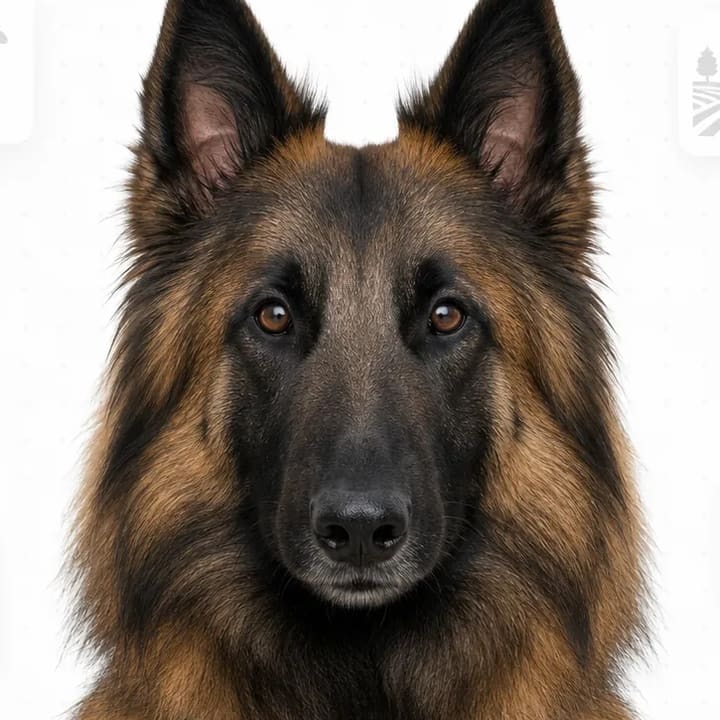
The Tervuren is one of four Belgian herding dogs that were once a single breed, the Chien de Berger Belge, told apart mainly by coat. It takes its name from the village of Tervuren, home of M.F. Corbeel, who crossed black and fawn dogs in the early 1900s to set the modern type. The first Terv was registered with the AKC in 1918, but the breed was shown as a Belgian Sheepdog until 1959, when the AKC gave it separate status. It ranked No. 115 in the AKC's 2025 list.
Terv buyers usually come for what the dog can do. The AKC lists herding, agility, obedience, mushing, and protection sports, and today's Tervs work as police and military K-9s, search and rescue dogs, and service dogs. The standard prefers rich fawn to russet mahogany with black overlay, a black mask, and a coat that darkens with age, most of all on mature males. Males also carry the longer collarette and more coat, which families notice in photos.
The AKC gives a life expectancy of 12 to 14 years and calls the Terv typically healthy. Breeders screen for hip and elbow dysplasia, progressive retinal atrophy, and epilepsy, and the American Belgian Tervuren Club recommends hips, elbows, eyes, and thyroid for every Terv. The club warns that epilepsy may not show up until three years of age or older, and researchers have found a chromosome 14 risk variant that turns up more often in Tervuren and Belgian Sheepdogs.