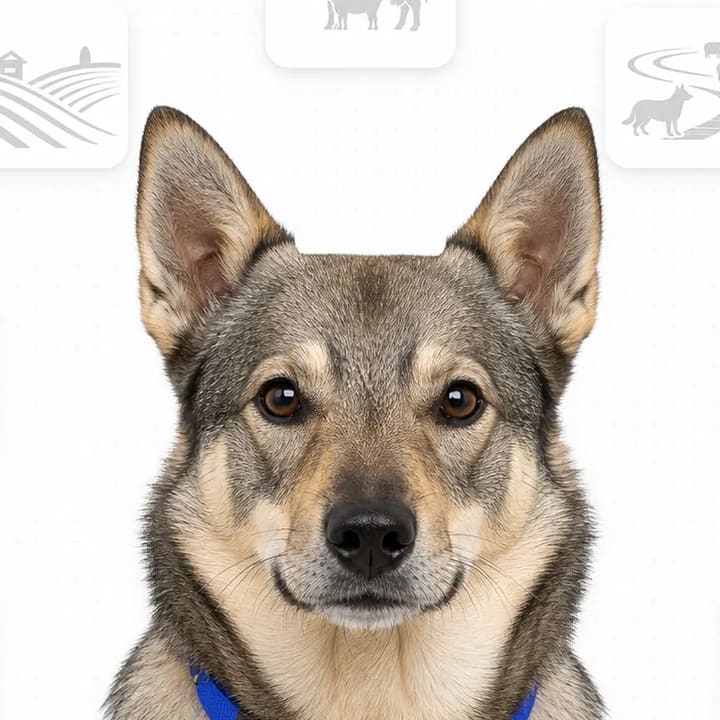
The Vallhund, or Västgötaspets, was the cattle dog and all-purpose farmhand of western Sweden, and Swedish accounts trace it back more than 1,000 years to the Vikings. By 1942 it was almost gone, and Björn von Rosen and K. G. Zettersten rebuilt it from a handful of dogs; the Swedish Kennel Club recognized it in 1943. The first US litter, nine puppies, was born in 1986, the AKC recognized the breed in 2007, and it ranked No. 152 in the AKC's 2025 list.
Vallhund buyers ask about two things. The first is color: the standard calls for a sable pattern in shades of grey through red, with lighter harness markings that are essential to the breed and white kept to under a third of the coat. The second is the tail. The standard accepts long, stub, or bob tails, natural or docked, and puppies in the same litter can be born with anything from no visible tail to a full spitz curl.
The AKC gives a life expectancy of 12 to 15 years, and the Swedish Vallhund Club of America says the breed commonly lives to 15. The club names hip dysplasia and Swedish Vallhund retinopathy, an adult-onset form of PRA that usually shows at 8 to 10 years, reduces night vision, and adds to cataracts as it progresses. A DNA test for it has been available since 2017, so breeders can tell clear, carrier, and affected dogs apart before they plan a pairing.