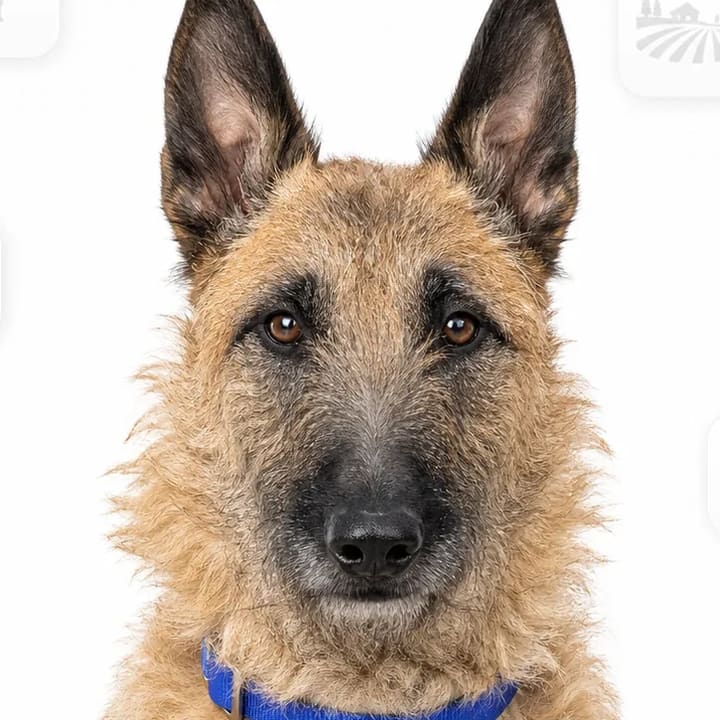
When the Belgian Shepherd Dog Club formed in 1891, it found one native type of dog, alike in body and temperament and different only in coat. The fawn, rough-haired dogs took the name Laekenois from the town of Laeken, where they guarded flocks and the linen laid out to dry in the fields. Their numbers fell sharply when they served as messenger dogs in both world wars. The breed entered the AKC Foundation Stock Service in 1998 and the Miscellaneous Class in 2011, was fully recognized in 2020, and ranked No. 196 in the AKC's 2025 list.
The coat is what sets the Laekenois apart from the Malinois, Tervuren, and Belgian Sheepdog: rough, coarse, and tousled, about 2½ inches over the body, with a beard on the muzzle. Color runs through all shades of red or fawn to grayish tones, with traces of black mainly on the muzzle and tail, and the standard treats every degree of blackening as equally correct. The AKC describes a dog that is protective of its people and property, observant with strangers, and affectionate with those it knows well.
The AKC gives a life expectancy of 10 to 12 years and calls the Laekenois robust and healthy. The American Belgian Laekenois Association strongly recommends that every breeding dog in the United States be screened for hip dysplasia, elbow dysplasia, inherited eye disease, heart disease, thyroid, and dentition. Elbows are the one to watch: of 193 Laekenois elbow results on file with OFA, 18.1 percent are abnormal.