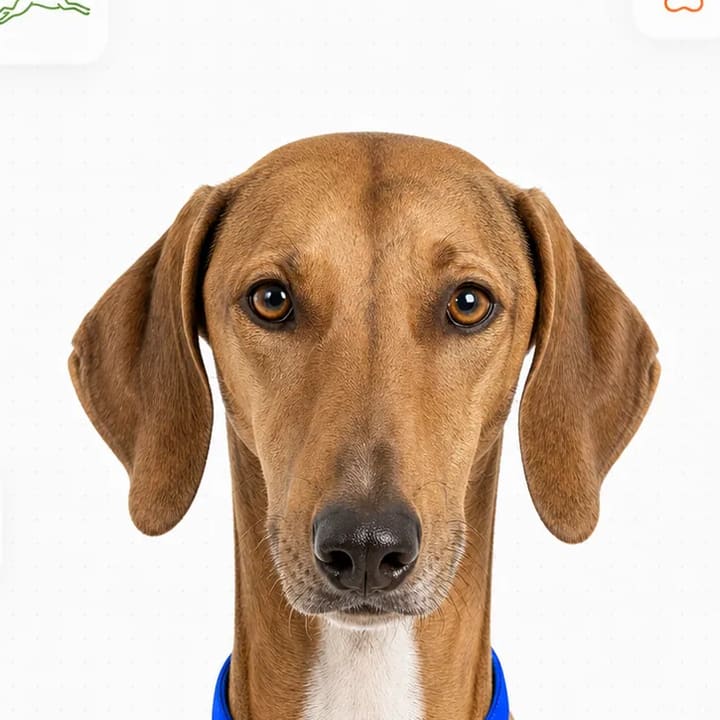
The Azawakh comes from the south Sahara and the Sahel, in Mali, Niger, and Burkina Faso, and takes its name from the Azawakh Valley. The Tuareg nomads who kept it call it idii n' illeli, the sighthound of the free people, and used it to guard the camp and flocks and to hunt hare, antelope, and wild boar. The breed reached Europe around 1970, the American Azawakh Association has been its AKC parent club since 2011, and the AKC recognized it in 2019. It ranked No. 195 in the AKC's 2025 list.
Azawakh buyers need more explaining than most. The standard says a dog in correct weight shows three to five ribs, and the AKC tells owners to learn what good condition looks like on a hound this lean. The standard's temperament is quick, attentive, distant, and reserved with strangers, gentle with the people it accepts, and the AKC notes an Azawakh left alone in a yard will not exercise itself. Color and markings are immaterial, so families can ask for red, sand, fawn, brindle, parti-color, blue, black, or brown.
The AKC gives a life expectancy of 12 to 15 years and calls Azawakhs generally healthy, with responsible breeders screening for hypothyroidism, seizures, cardiac problems, and autoimmune disease. The American Azawakh Association's 2015 letter to the AKC listed the known issues as seizures and epilepsy, hypothyroidism, masticatory myositis, spinal stenosis, and various autoimmune problems. There is no CHIC program for the breed and no set of tests the AKC recommends, so each breeder decides what to screen and publish.